This page contains affiliate links. If you purchase through them we may earn a small commission at no extra cost to you. Learn more
Diverter Priority Chains: Optimising Surplus Solar
What is a priority chain?
When your solar panels produce more electricity than your home is consuming at that moment, you have surplus power. A priority chain is simply the order in which that surplus gets directed to different loads before any remainder goes to the grid.
A typical priority chain looks like this:
- Home loads (always first — powering what's running in your house)
- Battery storage (charge the battery for evening use)
- Hot water immersion (heat the cylinder via a diverter)
- EV charging (top up the car if it's plugged in)
- Grid export (whatever's left earns your SEG rate)
The logic is straightforward: use surplus where it displaces the most expensive energy first. Battery electricity used in the evening displaces peak-rate grid imports (~24p/kWh). Hot water displaces gas (7p/kWh) or off-peak electricity (10–15p/kWh). EV charging displaces petrol or public charging costs. Grid export earns the least (12–15p/kWh on a competitive SEG tariff).
Why the order matters
Consider a 4kW system producing 3kW of surplus at midday. Without a priority chain, all 3kW exports to the grid at 12p/kWh = 36p per hour of value.
With a well-configured priority chain:
- 2kW charges the battery (displacing 24p/kWh evening import) = 48p per hour of value
- 1kW heats water via the diverter (displacing 7p/kWh gas) = 7p per hour of value
That's 55p vs 36p — over 50% more value from the same surplus.
Over a year, the difference between a well-optimised priority chain and simply exporting everything can be £200–£400, depending on system size and consumption patterns.
Setting up priorities with different equipment
myenergi ecosystem
If you have myenergi devices, priority management is built into the hub. The system recognises:
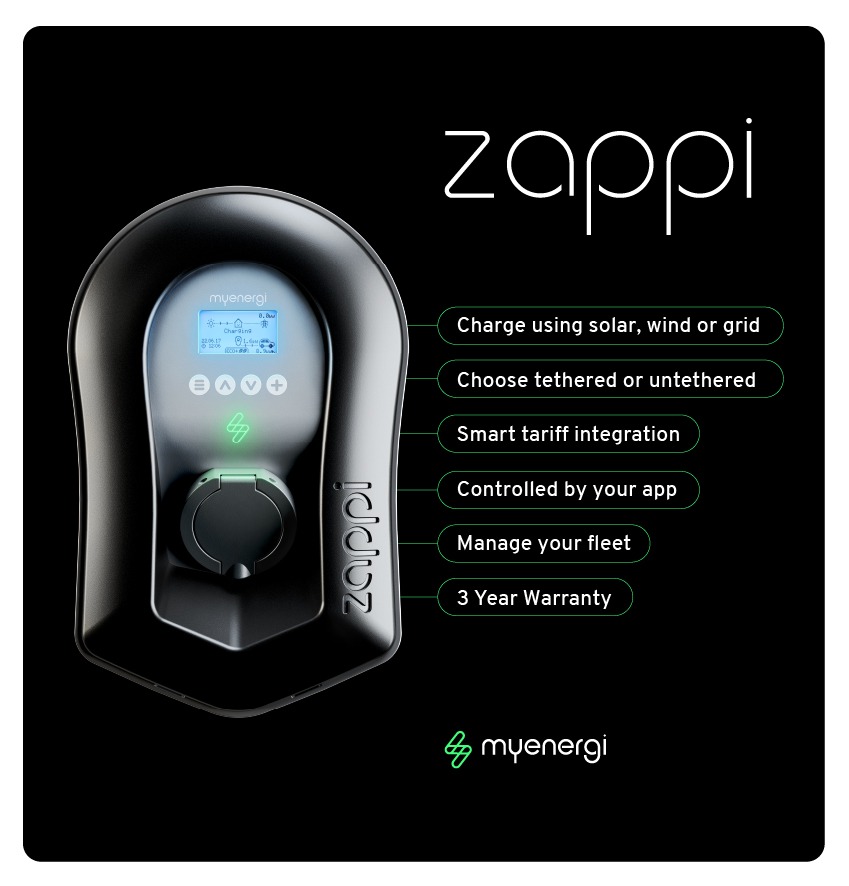
- Zappi — EV charger with surplus solar mode ("Eco" and "Eco+" modes)
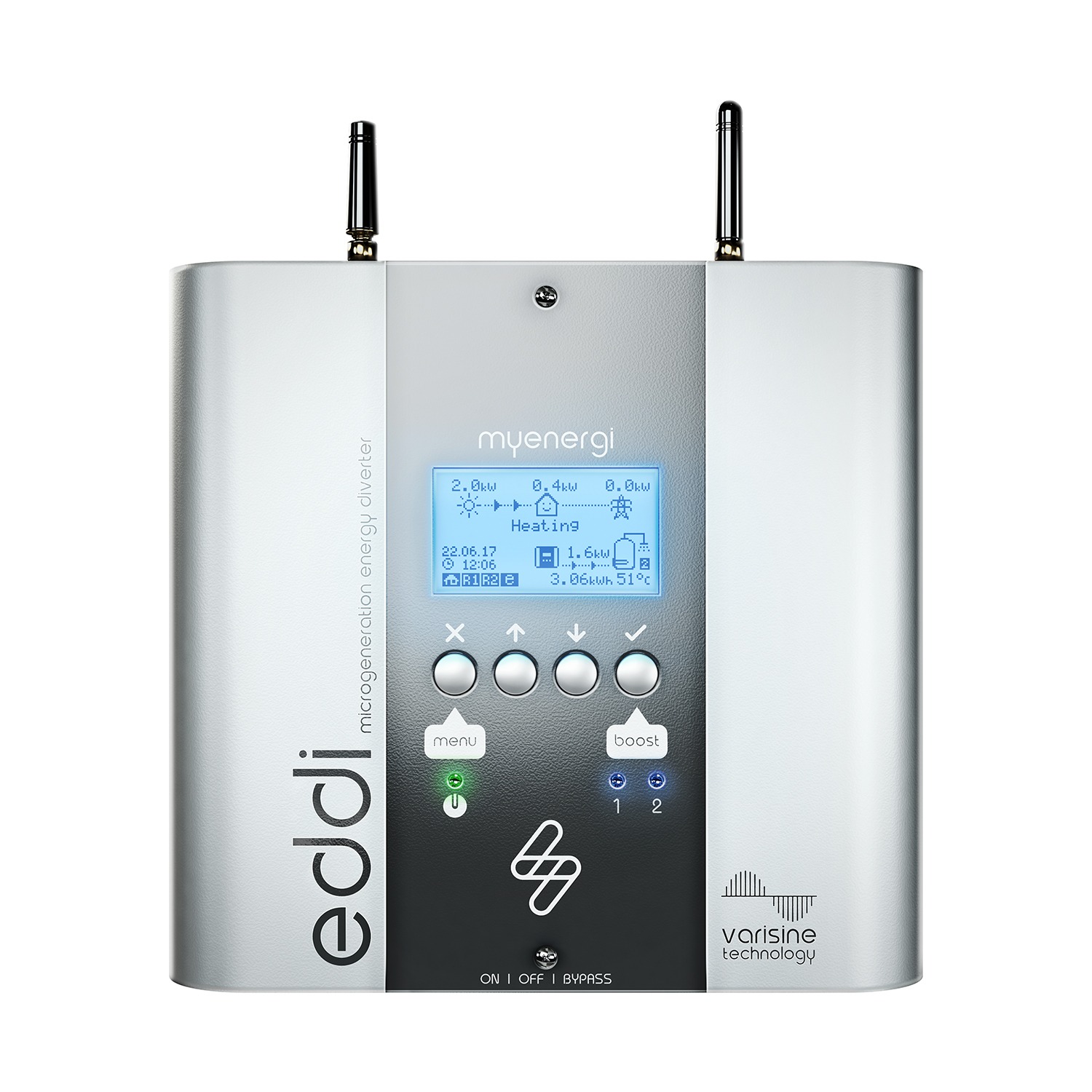
- Eddi — hot water/heating diverter with two outputs
- Libbi — battery storage
Through the myenergi app, you assign a priority number to each device. The hub coordinates them automatically, directing surplus to the highest-priority device first, then cascading down.
This is the most elegant solution for homes without a hybrid inverter managing battery priority internally.
Hybrid inverter + separate diverter
Most homes with a hybrid inverter (GivEnergy, Sunsynk, Solis, Fox ESS, Growatt) handle battery charging internally — the inverter prioritises battery charging from surplus before allowing export. You don't need to configure this; it's the default behaviour.
The diverter (iBoost+ or Eddi) then sits on the AC side, picking up any surplus that overflows after the battery is full or charging at maximum rate. This creates a natural two-stage priority:
- Battery (managed by hybrid inverter)
- Hot water (managed by diverter)
- Grid export (whatever's left)
This setup works well and requires no complex integration between the inverter and diverter — they operate independently using their own CT clamps.
CT clamp conflicts
If both your hybrid inverter and diverter use CT clamps on the meter tails, ensure they don't interfere with each other. In most cases, they work fine — both are measuring the same net flow. However, some combinations can cause oscillation (the diverter and inverter "fighting" over surplus). If you see your export bouncing erratically, your installer may need to adjust CT clamp placement or configure one device to use the other's data feed instead.
Adding EV charging to the chain
If you have an EV charger that supports solar surplus charging (like the Zappi, Ohme, or Wallbox with solar integration), it typically sits at the bottom of the priority chain — after battery and hot water.
Why? Because:
- EV charging can usually happen overnight on a cheap tariff (Octopus Go, Intelligent Octopus, etc.) at ~5.5p/kWh
- Battery storage displaces ~24p/kWh evening imports
- Hot water from solar displaces gas/electricity that can't easily be time-shifted
However, if your car is your commute vehicle and needs charging urgently, you might temporarily boost EV priority above hot water. Flexibility matters more than rigid rules.
Seasonal priority adjustments

The optimal priority chain isn't static. Consider adjusting through the year:
Summer (April–September)
Solar surplus is abundant. Your battery will likely fill by midday. Priority: battery → hot water → EV → export. The diverter earns its keep in summer because there's plenty of surplus after the battery is full.
Winter (October–March)
Solar surplus is scarce. Every kWh matters more in the battery for evening use. Priority: battery → minimal diversion → export for SEG income. In deep winter, there may be no meaningful surplus at all, so the priority chain is academic.
Shoulder months (March, October)
These are where fine-tuning pays off. Monitor your system and adjust based on actual surplus patterns.
Don't over-complicate it
For most UK households, the default priority chain built into a hybrid inverter + standalone diverter works perfectly without any manual intervention. Battery charges first (inverter handles this), diverter takes the overflow (CT clamp detects it automatically), and the rest exports. Only consider advanced configuration if you have multiple competing loads or are on a smart tariff where timing matters.
Advanced: smart tariff integration
If you're on a time-of-use tariff like Octopus Agile, the priority chain gains another dimension — time. During plunge pricing (near-zero or negative rates), it makes sense to:
- Charge the battery from the grid (not just solar)
- Boost the immersion from cheap grid electricity
- Charge the EV from the grid
This isn't strictly a solar diversion priority — it's intelligent energy management. Devices like the Eddi and Zappi can respond to tariff signals. GivEnergy and Sunsynk inverters can schedule battery charging during cheap periods.
The priority chain then becomes:
During cheap grid periods: Grid → battery + hot water + EV During solar surplus: Solar → battery → hot water → EV → export During peak rates: Battery → home loads (minimise grid import)
What a well-optimised system looks like
A household with a 4kW solar array, 5kWh battery, Eddi diverter, and Zappi EV charger might achieve:
- Self-consumption rate: 75–85% (vs 30–40% without battery/diverter)
- Annual grid import reduction: 3,000–4,000 kWh
- Annual energy cost saving: £800–£1,200
- Grid export: Only 500–800 kWh (earning £60–£96 SEG at 12p/kWh)
The marginal cost of adding a diverter to an existing solar + battery system is £300–£500 — a fast payback for the extra 10–15% self-consumption it captures.
Key takeaways
The best priority chain is one that matches your household's actual patterns. Don't chase theoretical optimums — monitor your system for a month, see where surplus goes, and adjust accordingly. The biggest gains come from getting battery and hot water diversion working; after that, the marginal improvements from fine-tuning are smaller.
Start simple, monitor the data, and refine over time.
The myenergi Eddi is the most popular solar diverter for hot water in the UK. Here's what we'd recommend:
myenergi Eddi Solar Diverter
£1853000
power_divert,timed_boost
2
configurable
Affiliate link — we may earn a small commission at no extra cost to you
If you also want solar-powered EV charging as part of your priority chain:
myenergi Zappi 22kW EV Charger
£78022
7.4
22
fast,eco,eco_plus
Affiliate link — we may earn a small commission at no extra cost to you
Share this article

The UK's fastest boiler installation service — from quote to fitted in as little as 24 hours. Award-winning, Trustpilot rated, with no pushy salesmen.
Affiliate link — we may earn a small commission at no extra cost to you
Stay informed
Get free solar updates direct to your inbox
Related reading

Solar Immersion Heating: Using Surplus Power for Hot Water
How solar immersion diverters send surplus electricity to your hot water tank, cutting gas bills. UK costs, setup requirements, and realistic savings.

iBoost vs Eddi vs Immersun: Solar Diverter Showdown
Comparing the iBoost+, myenergi Eddi, and Immersun solar diverters. Features, prices, and which suits your UK solar setup best in 2026.
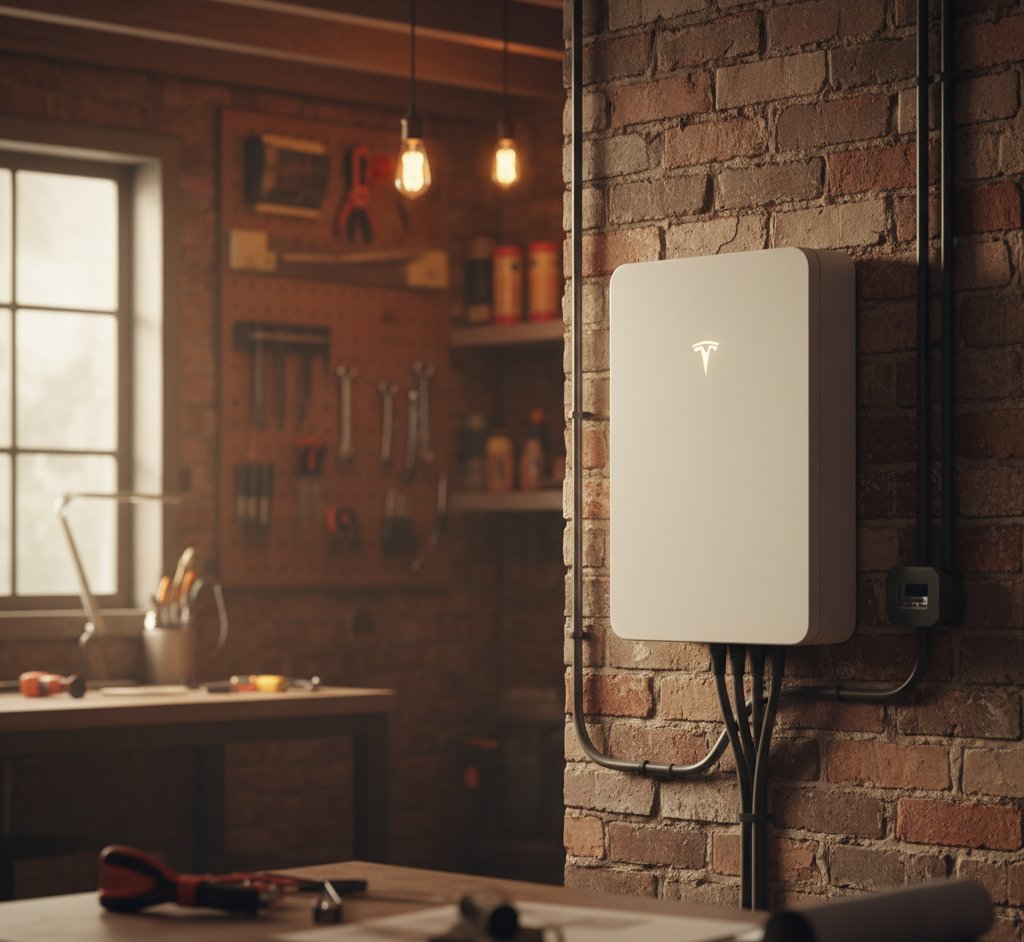
Solar Battery Storage: Complete UK Guide 2026
Everything you need to know about adding battery storage to a UK solar installation — types, sizing, costs, and which products are worth considering in 2026.


Switch to Octopus Energy
Get 50 credit when you switch. We get 50 too — win-win.
What does this mean for YOUR home?
Design your perfect solar setup in under 3 minutes. Free, no sign-up required.
Build Your Solar System