This page contains affiliate links. If you purchase through them we may earn a small commission at no extra cost to you. Learn more
Solar Panel Degradation: How Much Output Do You Lose?
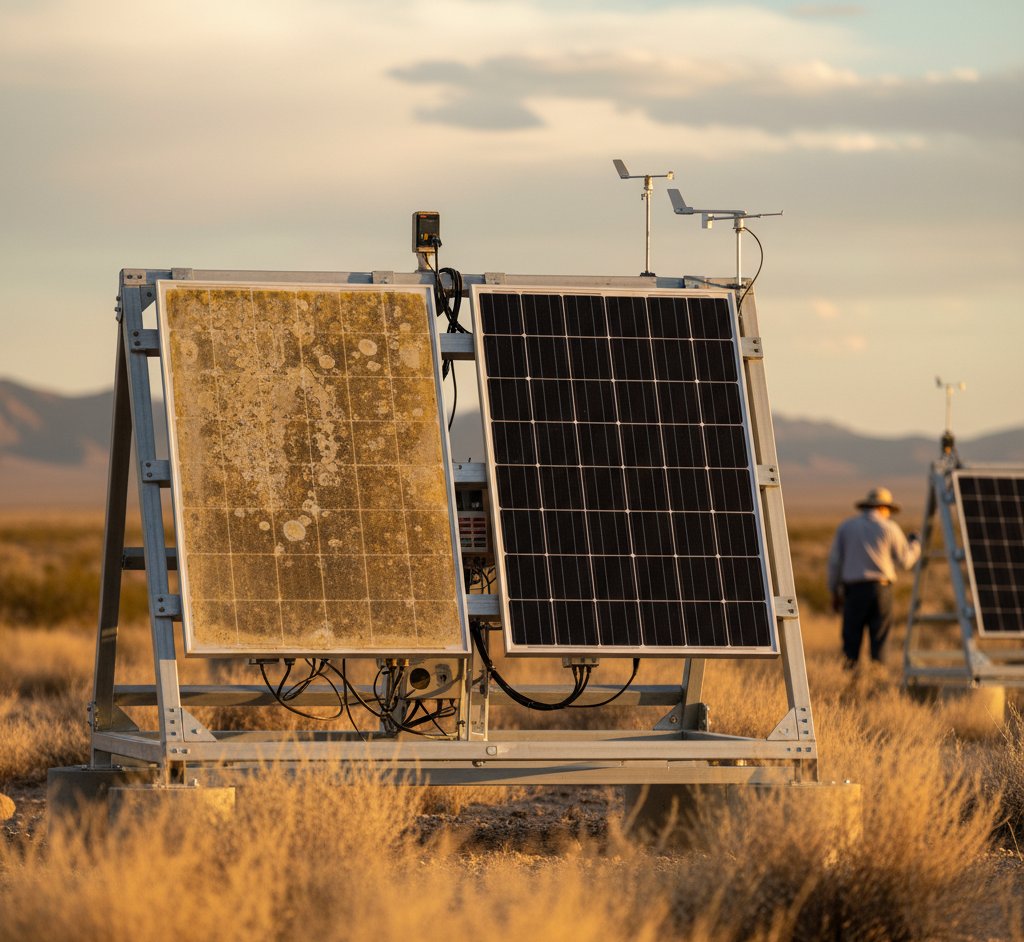
All solar panels gradually lose output over time. This is called degradation, and it's a normal, expected part of solar panel aging. The good news is that modern panels degrade very slowly — losing less than half a percent per year. Here's what that means in practice.
What Causes Degradation?
Solar panel degradation is primarily caused by:
Light-Induced Degradation (LID)
When panels are first exposed to sunlight, a chemical reaction occurs in the silicon cells that slightly reduces their efficiency. This happens in the first few days to weeks and accounts for a 1–3% output loss. LID is a one-off event — it doesn't continue after the initial exposure.
Some premium panels use n-type silicon cells (like the LONGi Hi-MO 6) which have significantly lower LID than traditional p-type cells.
Potential-Induced Degradation (PID)
High system voltages can cause a gradual loss of performance in certain conditions (humidity, temperature). Modern panel designs and proper system earthing minimise PID risk. Quality inverters with PID prevention features essentially eliminate this concern.
Thermal Cycling
Daily temperature changes (heating during the day, cooling at night) cause microscopic expansion and contraction in panel materials. Over years, this can create micro-cracks in cells that slightly reduce output.
UV Exposure
Ultraviolet light gradually degrades the encapsulant material that protects the cells. High-quality panels use UV-resistant encapsulants that minimise this effect.
Moisture Ingress
If the panel's edge seals or backsheet deteriorate, moisture can enter and accelerate cell degradation. Well-manufactured panels with robust sealing have minimal moisture ingress over their rated lifespan.
How Much Output Do You Actually Lose?
For a typical 4kW system generating 3,600kWh in year one:
| Year | Output (at 0.4% annual degradation) | % of Original |
|---|---|---|
| 1 | 3,600kWh | 100% |
| 5 | 3,543kWh | 98.4% |
| 10 | 3,472kWh | 96.4% |
| 15 | 3,403kWh | 94.5% |
| 20 | 3,335kWh | 92.6% |
| 25 | 3,269kWh | 90.8% |
| 30 | 3,204kWh | 89.0% |
After 25 years, you're still generating over 90% of the original output. After 30 years, nearly 89%. The panels don't stop working at 25 years — they just produce a bit less than when new.
Real-World vs Lab Conditions
Degradation rates quoted by manufacturers are measured under standard test conditions (STC) in laboratories. Real-world degradation can vary based on your local climate, installation quality, and panel quality. UK conditions (mild climate, moderate temperatures) are actually favourable for panel longevity compared to hot, humid climates.
Manufacturer Warranty Guarantees
Panel warranties typically include a performance guarantee:
| Warranty Term | Guaranteed Minimum Output |
|---|---|
| Year 1 | 97–98% of rated power |
| Year 10 | 90–93% of rated power |
| Year 25 | 80–87.4% of rated power |
| Year 30 | 80–85% (some manufacturers) |
Premium panels from brands like LONGi, Trina, and Canadian Solar now offer 30-year performance warranties guaranteeing 87.4% output at year 25 and 84.8% at year 30.
If your panels degrade faster than the warranty guarantees, you have a valid warranty claim against the manufacturer.
Comparing Panel Types
Degradation rates vary by technology:
| Panel Type | Typical Annual Degradation | Notes |
|---|---|---|
| Monocrystalline (p-type PERC) | 0.4–0.5% | The current mainstream technology |
| Monocrystalline (n-type TOPCon) | 0.3–0.4% | Newer, lower degradation |
| Monocrystalline (n-type HJT) | 0.25–0.35% | Lowest degradation, premium price |
| Polycrystalline | 0.5–0.7% | Older technology, higher degradation |
| Thin-film (CdTe) | 0.3–0.5% | Rarely used in residential UK |
The trend is clear: newer n-type technologies degrade more slowly than older p-type designs. If long-term output retention is important to you, n-type panels are worth the modest price premium.

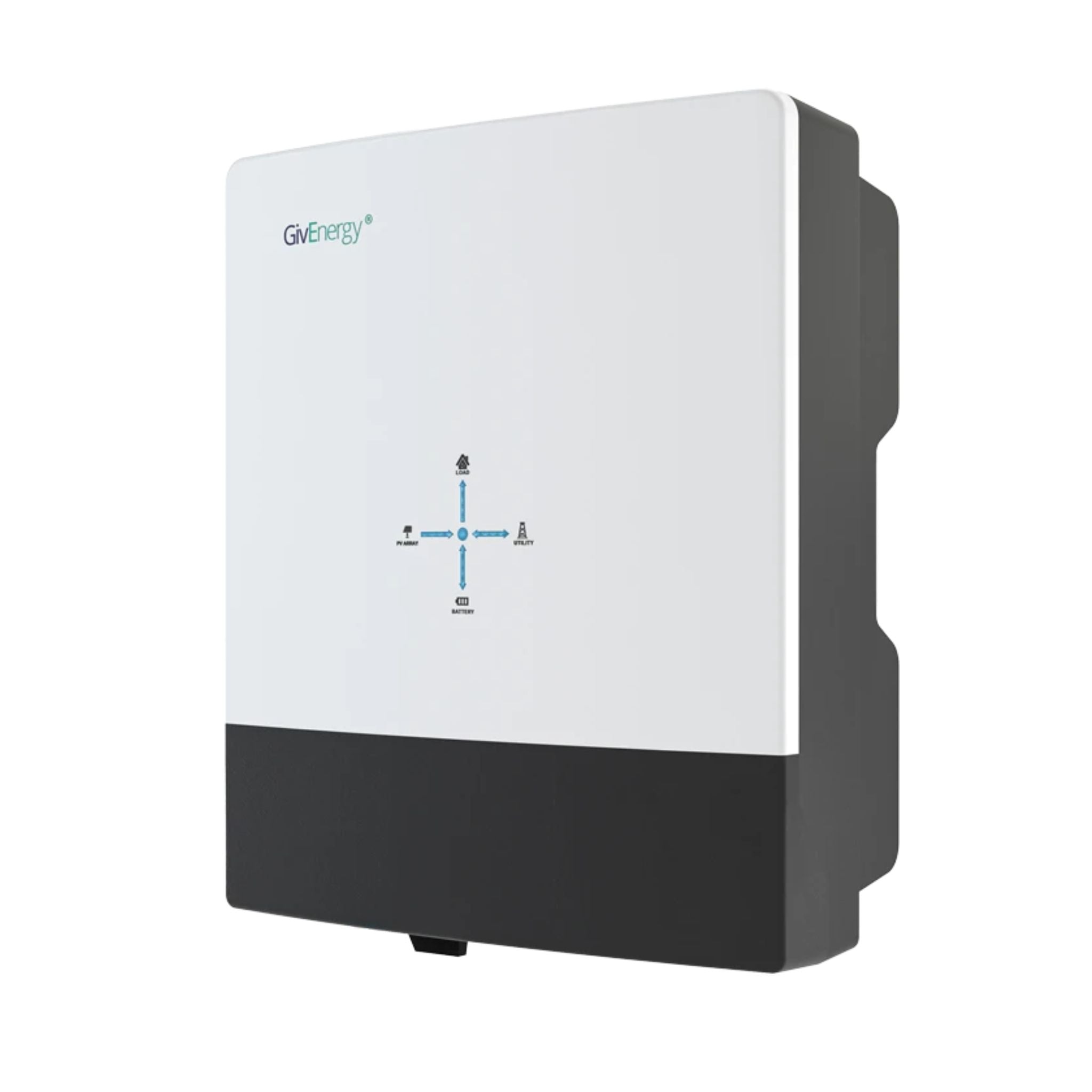
GivEnergy All-in-One 5kW Hybrid Inverter
£1,2005
7.5
2
48V
Affiliate link — we may earn a small commission at no extra cost to you
What About the Inverter?
While panels degrade slowly, the inverter is a separate component with a different lifespan. String inverters typically last 10–15 years before needing replacement. Microinverters and optimisers last 20–25 years.
Inverter failure isn't degradation — it's a complete stop in generation until replaced. Budget for one inverter replacement over the 25–30 year panel lifespan.
Don't Confuse Degradation with Fault
A gradual loss of 0.4% per year is normal and barely noticeable. A sudden drop of 10% or more in output is NOT degradation — it's likely a fault (failed panel, inverter issue, shading change, or wiring problem). If your monitoring shows a sudden drop, contact your installer rather than assuming it's normal aging.
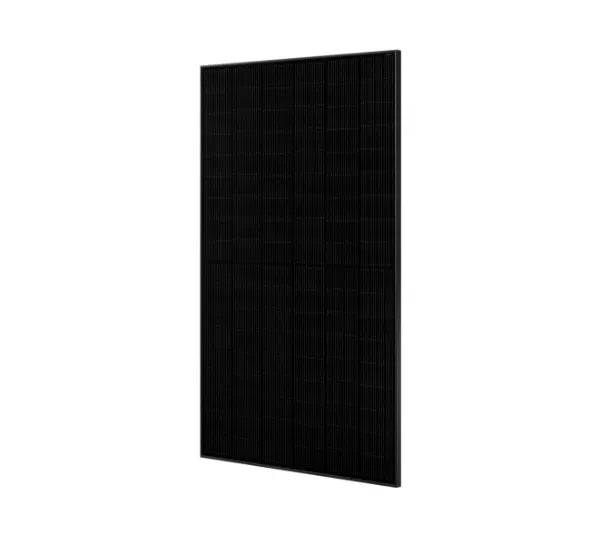
JA Solar JAM54D41 450W N-type TOPCon
£82450
22.8
1722 x 1134 x 30
21.5
Affiliate link — we may earn a small commission at no extra cost to you
Financial Impact of Degradation
Degradation is already factored into most payback calculations. Over a 25-year system life, the cumulative output is approximately 93–95% of what it would be without any degradation.
For a 4kW system:
- Without degradation (theoretical): 90,000kWh over 25 years
- With 0.4% annual degradation: approximately 84,500kWh over 25 years
- Difference: 5,500kWh (~6%) over the full 25 years
At 24p/kWh, that's approximately £1,320 less over 25 years — or £53 per year on average. Significant but not dramatic, and already accounted for in reputable installers' generation estimates.
Can You Reduce Degradation?
There's limited control over the physical degradation process, but you can:
- Choose quality panels — Premium brands with lower degradation rates and better quality control
- Ensure proper installation — Correct mounting reduces thermal stress and moisture risk
- Keep panels clean — Soiling isn't degradation, but it reduces output similarly. Regular maintenance keeps panels performing at their degraded maximum
- Monitor performance — Catch actual faults early rather than dismissing lost output as "normal degradation"
Panel degradation over time
Solar panels lose output gradually each year. The shaded band shows the typical range for your panel type. Drag the slider to explore best and worst cases.
10 panels
4.5 kW system
2% first-year loss
After year 1
3,969
98% (2% LID loss)
Year 25
3,519
87% of original
Year 50
3,105
77% of original
50yr total
180k
kWh generated
Mono-PERC panels lose ~2% in year one from Light-Induced Degradation (LID), then degrade linearly. The 25-year warranty guarantees at least 80% output. Field data beyond 30 years is limited — projections past that point are modelled, not measured.
Share this article

OVO has carefully selected trusted teams across the UK to install solar panels and heat pumps. Enjoy the personal touch of a local expert with the peace of mind of a household name.
Affiliate link — we may earn a small commission at no extra cost to you
Stay informed
Get free solar updates direct to your inbox
Related reading
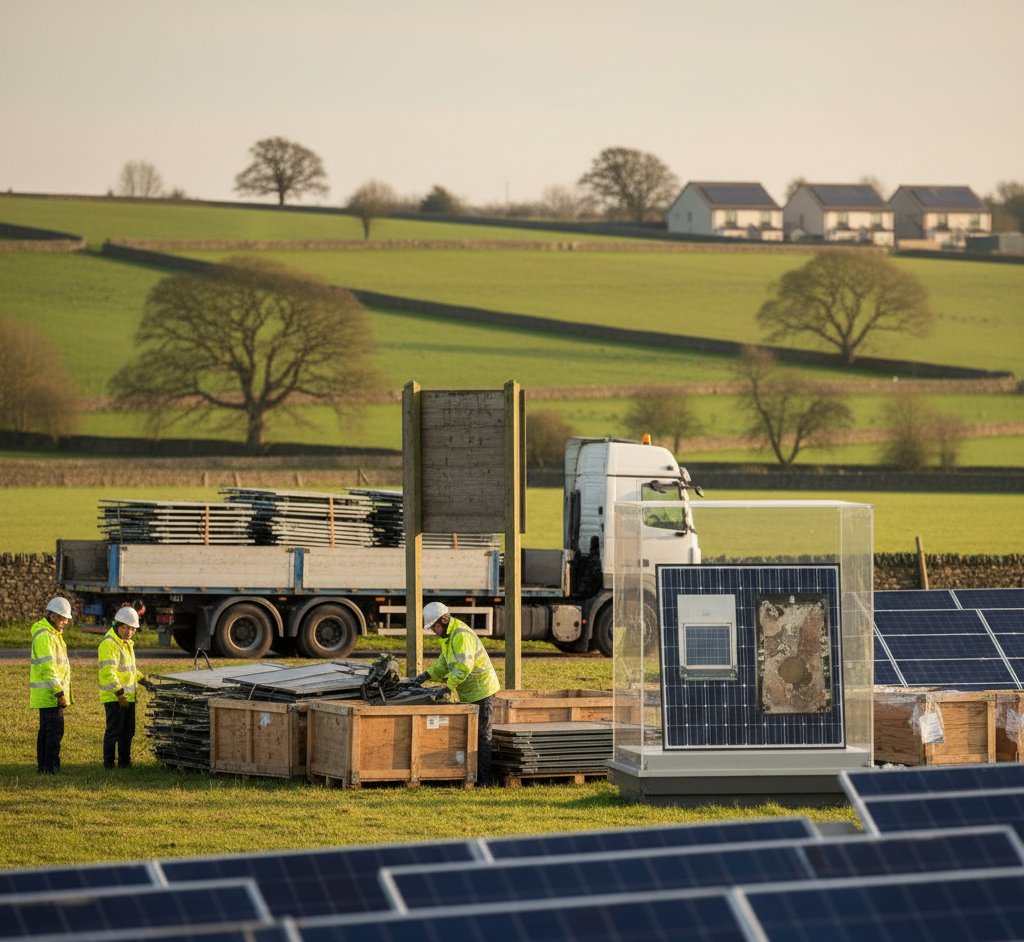
How Long Do Solar Panels Last? The Honest Answer
Solar panels are rated for 25–30 years, but what does that actually mean? Degradation rates, warranty types, what happens after 25 years, and why inverters are the weak link.
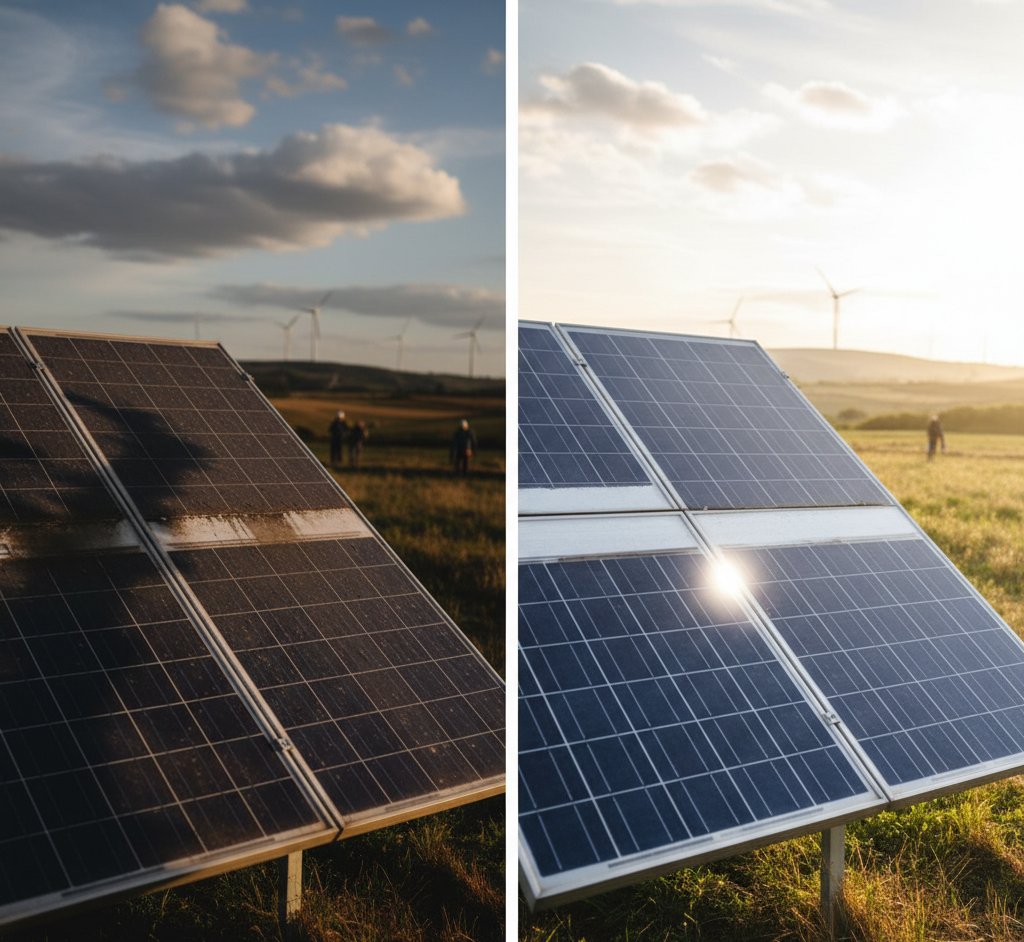
Solar Panel Efficiency: What It Means and Why It's Not Everything
Panel efficiency explained plainly — what the percentage actually means, why the gap between 20% and 22% barely matters for most UK homes, and what you should actually be comparing.
Best Solar Panels for UK Homes 2026
An honest look at the best solar panels available for UK homes in 2026 — covering JA Solar, Trina, Canadian Solar, and LONGi, with real specs and what to look for.


Switch to Octopus Energy
Get 50 credit when you switch. We get 50 too — win-win.
What does this mean for YOUR home?
Design your perfect solar setup in under 3 minutes. Free, no sign-up required.
Build Your Solar System