This page contains affiliate links. If you purchase through them we may earn a small commission at no extra cost to you. Learn more
Renters' Rights Act 2025: Can Tenants Now Get Solar Panels?
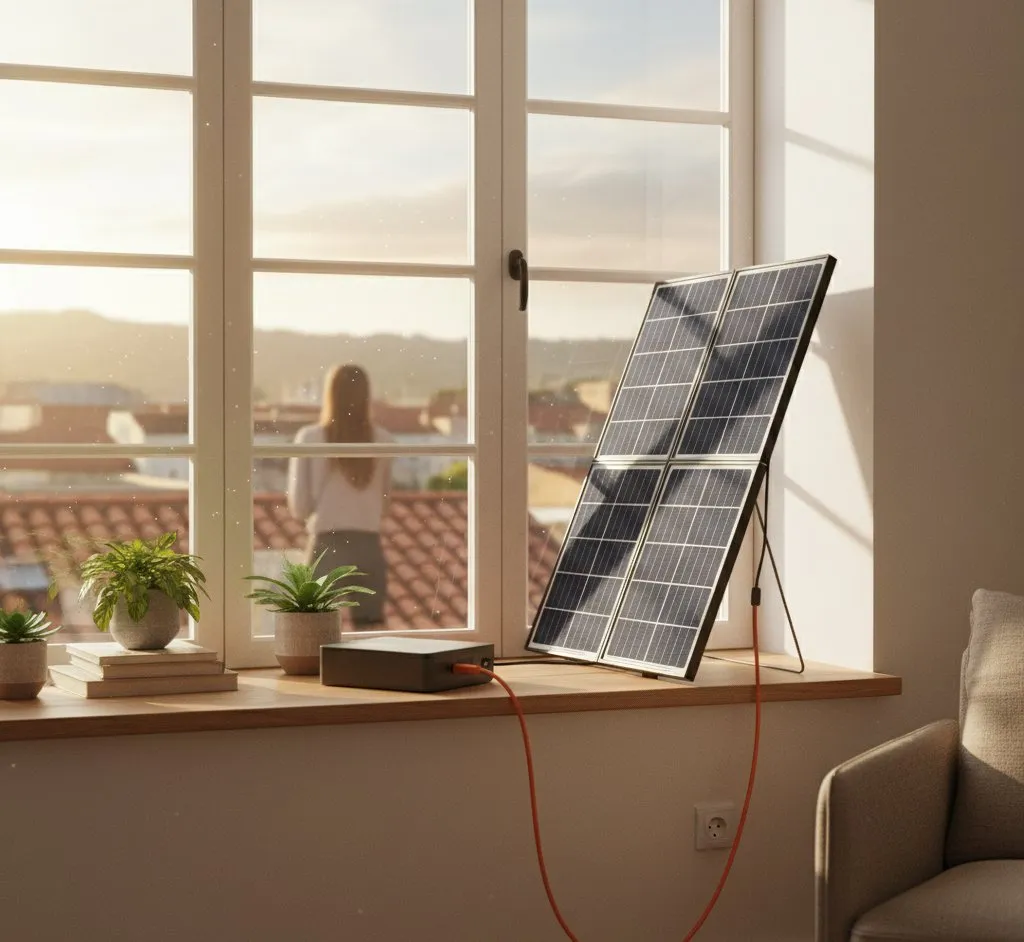
The Renters' Rights Act 2025 received Royal Assent in October 2025. Among its provisions is something tenants asking about solar panels have long wanted: a statutory right to request energy efficiency improvements from their landlord, with the landlord unable to refuse without a valid reason.
This is a meaningful legal change. But it comes with important caveats — and the practical reality for roof-mounted solar in a rented home is still difficult.
What Section 11 Actually Says
Before the Renters' Rights Act, a tenant wanting their landlord to install solar panels had no formal mechanism to make that request enforceable. A landlord could simply ignore it. Section 11 changes that.
From 1 May 2026, tenants have a statutory right to request energy efficiency improvements to their rented property. This applies to any improvement that raises the property's energy efficiency — including, explicitly, solar PV panels, insulation, heat pumps, and draught-proofing.
The landlord must respond to the request within a set period and cannot refuse without reasonable grounds. If they do refuse without justification, the tenant can escalate the matter.
This is not the same as the landlord being forced to install anything. It is a right to make a formal, enforceable request — and to challenge an unreasonable refusal.
This Act does not override planning permission, lease restrictions, or building regulations
Solar panels on a rented property still need the same approvals as any other installation. The Renters' Rights Act creates a process for making and responding to requests — it does not bypass planning law, building regulations, lender restrictions on mortgaged properties, or the terms of a lease. All of those still apply.
What Counts as an Energy Efficiency Improvement?
The Act uses a broad definition. "Energy efficiency improvements" includes any measure that reduces energy consumption or carbon emissions in the dwelling. Examples that fall within scope:
- Solar PV panels — generate electricity, reduce grid consumption
- Loft and wall insulation — reduce heat loss
- Heat pumps — replace gas or electric resistance heating with more efficient systems
- Draught-proofing — reduce air infiltration
- Double or triple glazing — reduce heat loss through windows
- Smart heating controls — reduce energy waste from overshooting
Solar PV is explicitly within scope. A tenant can formally request that a landlord consider installing solar panels under Section 11.
When Can a Landlord Refuse?
The Act allows landlords to refuse a request on reasonable grounds. Reasonable grounds include:
Structural unsuitability. If the roof cannot support solar panels — due to age, condition, roof type, or structural assessment — this is a valid reason to decline. A landlord who has had a structural survey confirming unsuitability has grounds for refusal.
Listed building or conservation area constraints. Solar panels on listed buildings generally require listed building consent, which is often refused or heavily restricted. If a property is listed or in a conservation area with restrictions, this is a valid basis for refusal.
Lease prohibits alterations. If the landlord is themselves a leaseholder (common in blocks of flats), their lease may prohibit structural alterations. They cannot grant permission they do not have.
Cost is unreasonable. If the improvement would cost significantly more than the benefit it delivers, or more than the landlord could be expected to recover in any realistic timeframe, cost can be grounds for refusal. The threshold is not defined precisely in the Act — disputes would be resolved through the tribunal process.
Tenancy too short to justify the investment. If the remaining tenancy is very short and the landlord has legitimate grounds to conclude the investment is not recoverable, this can be raised.
Note that "I don't want to" is not a valid ground. The refusal must be based on one of the recognised reasonable grounds.
The Practical Reality for Solar Panels
Even with Section 11 in place, roof-mounted solar on a rented property faces obstacles that go beyond the landlord's willingness.
System ownership. Solar panels are a permanent fixture. Once installed on a roof, they become part of the property. A tenant who funds a solar installation is effectively making a permanent improvement to someone else's building with no guaranteed recovery of that investment when they leave. Landlord and tenant would need clear written agreement on who owns the system, what happens at the end of the tenancy, and whether the tenant is compensated.
Insurance. A solar installation changes the risk profile of the property. The landlord's buildings insurance must be updated. Some insurers add a premium; others require a new policy. This is the landlord's responsibility and cost, even if the tenant pays for the panels themselves. Many landlords will be reluctant to absorb this complexity.
MCS certification. For the installation to qualify for the Smart Export Guarantee and meet grid connection requirements, it should be installed by an MCS-certified installer. This adds cost and means the installation must follow professional standards regardless of who pays for it.
Planning permission. Most residential solar panels are permitted development in England, but there are exceptions — listed buildings, conservation areas, flats in some circumstances, and properties where permitted development rights have been removed. These exceptions are not uncommon in dense urban areas where renting is most prevalent.
Landlord liability. If a professionally installed solar system later causes a roof leak or structural issue, the question of liability becomes complicated. Landlords are understandably cautious about taking on responsibility for systems they may not have wanted in the first place.
The result is that even with Section 11, most landlords will decline roof-mounted solar — and many will have legitimate grounds to do so. The Act gives tenants a formal process; it does not remove the genuine practical complications.
What Renters Can Realistically Do
Rather than waiting on a Section 11 outcome, most tenants will find these routes more immediately achievable.
Plug-In Solar (Legal from March 2026)
The UK government confirmed in March 2026 that plug-in solar panels under 800W are legally permitted for direct connection to domestic mains sockets — no electrician required. For renters, this is the most practical solar option:
- No permanent modification to the property
- No landlord permission strictly required (though informing them is courteous)
- Generates 300–700 kWh per year per panel at typical UK irradiance
- Payback period of 4–6 years at current electricity prices (~24p/kWh)
- You take the system with you when you move
You will still need to notify your DNO under G98, and the microinverter should be G98-certified. You will not be eligible for SEG export payments without MCS certification, but the self-consumption savings are real regardless.
See our plug-in solar guide for full detail on how these systems work.
Balcony Solar Panels
If your flat has a balcony, a balcony-mounted solar system uses the same plug-in microinverter approach — the panels mount to the balcony rail or frame, with a cable running to an indoor socket. These are widely used across Germany, France, and the Netherlands.
A typical 800W balcony setup can generate 400–700 kWh/year. Again, no structural modification to the roof is involved.
See our balcony solar guide for sizing, mounting options, and what to check with your freeholder if you are in a flat.
Portable Panels and a Power Station
If you have garden or patio access, a portable folding panel and a portable battery station (such as the EcoFlow Delta Pro) give you off-grid solar without any connection to the mains circuit at all. Nothing is fixed, nothing is permanent, and you take everything with you when you leave.

EcoFlow Delta Pro 3.6kWh Portable Power Station
£1,5003.6
3.4
LFP
3500
 View on EcoFlow UK
Affiliate link — we may earn a small commission at no extra cost to you
This will not power your whole home, but it covers phone and laptop charging, small appliance loads, and builds your understanding of solar before a more permanent system becomes an option.
Negotiate with Your Landlord Directly
If you have a long-term tenancy and a good relationship with your landlord, a direct conversation may be more productive than a formal Section 11 request — at least initially. Frame the case around the landlord's interests:
- Solar improves the EPC rating, helping meet MEES obligations
- Better EPC can unlock a green mortgage or cheaper remortgage for the landlord
- Tenant-funded solar adds value to the property at no cost to the landlord
- Lower energy bills improve tenant satisfaction and reduce turnover
A landlord who understands these incentives may agree without the need for a formal process.
What Landlords Should Know
If you are a landlord reading this because a tenant has raised the subject of solar panels, there are a few things worth understanding.
MEES is tightening. The current minimum EPC requirement for rented properties in England and Wales is band E. The government has announced a new dual-metric standard by 1 October 2030. Solar PV is one of the most effective single measures for improving an EPC rating — often by one to two bands. A tenant-funded solar installation that improves your property's EPC at no cost to you is worth serious consideration.
Tenant-funded improvements add value. A professionally installed, MCS-certified solar system on the roof increases the property's value. The tenant funds the improvement; you benefit when you sell or remortgage.
The Act creates an obligation to engage. From 1 May 2026, refusing a Section 11 request without reasonable grounds is no longer simply a matter of ignoring a letter. Unreasonable refusal can be challenged at tribunal. Engaging seriously with the request — even if you ultimately decline — demonstrates good faith and reduces your exposure.
Insurance and ownership need to be settled in writing. If you do agree to a tenant-funded solar installation, get a written agreement covering: who owns the system, what happens at the end of the tenancy (does the tenant remove it or leave it?), who is responsible for maintenance, and how the landlord's insurance will be updated.
How to Make a Section 11 Request
If you want to make a formal request under Section 11 of the Renters' Rights Act 2025, the process should be:
-
Put the request in writing. An email or letter is sufficient. State clearly that you are making a request under Section 11 of the Renters' Rights Act 2025.
-
Specify the improvement. Be clear about what you are requesting — for example: "Installation of a rooftop solar PV system of approximately 4kW, consistent with the property's energy efficiency needs."
-
State who will fund it. If you are offering to pay, say so clearly. This removes the cost objection from the landlord.
-
Give the landlord reasonable time to respond. The Act sets a response period — allow at least the statutory period before escalating.
-
Keep records. Keep copies of all correspondence in case you need to refer to them later.
A Section 11 request does not need to be a legal document. Plain, clear language that references the Act is sufficient.
Include a Practical Proposal
A request that includes a quote from an MCS-certified installer, a note on the expected EPC improvement, and a clear statement that you will fund the work is much harder to refuse without a substantive reason. The more concrete and reasonable your proposal, the stronger your position.
What Happens If the Landlord Refuses Unreasonably?
If a landlord refuses a Section 11 request without valid grounds — or simply fails to respond — the tenant can apply to the First-tier Tribunal (Property Chamber) in England, or the equivalent tribunal in Wales.
The tribunal can:
- Assess whether the refusal was reasonable
- Order the landlord to consider the request properly
- In some circumstances, make a determination on whether the improvement should proceed
This is not a quick process. Tribunal proceedings take time, and most tenants will find that the more practical routes above — plug-in solar, balcony panels, or direct negotiation — deliver results faster than a formal dispute. The tribunal route exists as a backstop for cases of clear, unreasonable refusal.
The Renters' Rights Act 2025 is a genuine step forward for tenants seeking to improve their homes' energy efficiency. Section 11 creates a formal, enforceable mechanism where none existed before. But for solar specifically, the practical barriers — ownership, insurance, planning, structural suitability — mean that the formal right and the practical outcome are not the same thing. Knowing the law, the process, and the alternatives gives you the best chance of finding a route that actually works.
For the current best options available to renters today, the solar for renters guide covers all practical routes in full detail.
Share this article
Stay informed
Get free solar updates direct to your inbox
Related reading
Solar Options for Renters: What Can You Actually Do?
Solar energy options for UK renters. From portable panels to smart tariffs, here's what you can actually do to benefit from solar without owning your home.
Solar Panels as a Leaseholder: Permissions and Options
Can leaseholders install solar? UK leasehold permissions, freeholder consent, lease covenants, and practical alternatives for flat owners.

MEES Regulations: Why Landlords Should Consider Solar
MEES regulations for UK landlords. How solar panels help meet minimum EPC requirements for rental properties, and what happens if you don't comply.


Switch to Octopus Energy
Get 50 credit when you switch. We get 50 too — win-win.
What does this mean for YOUR home?
Design your perfect solar setup in under 3 minutes. Free, no sign-up required.
Build Your Solar System