This page contains affiliate links. If you purchase through them we may earn a small commission at no extra cost to you. Learn more
Second-Life EV Battery Cells for Home Solar Storage
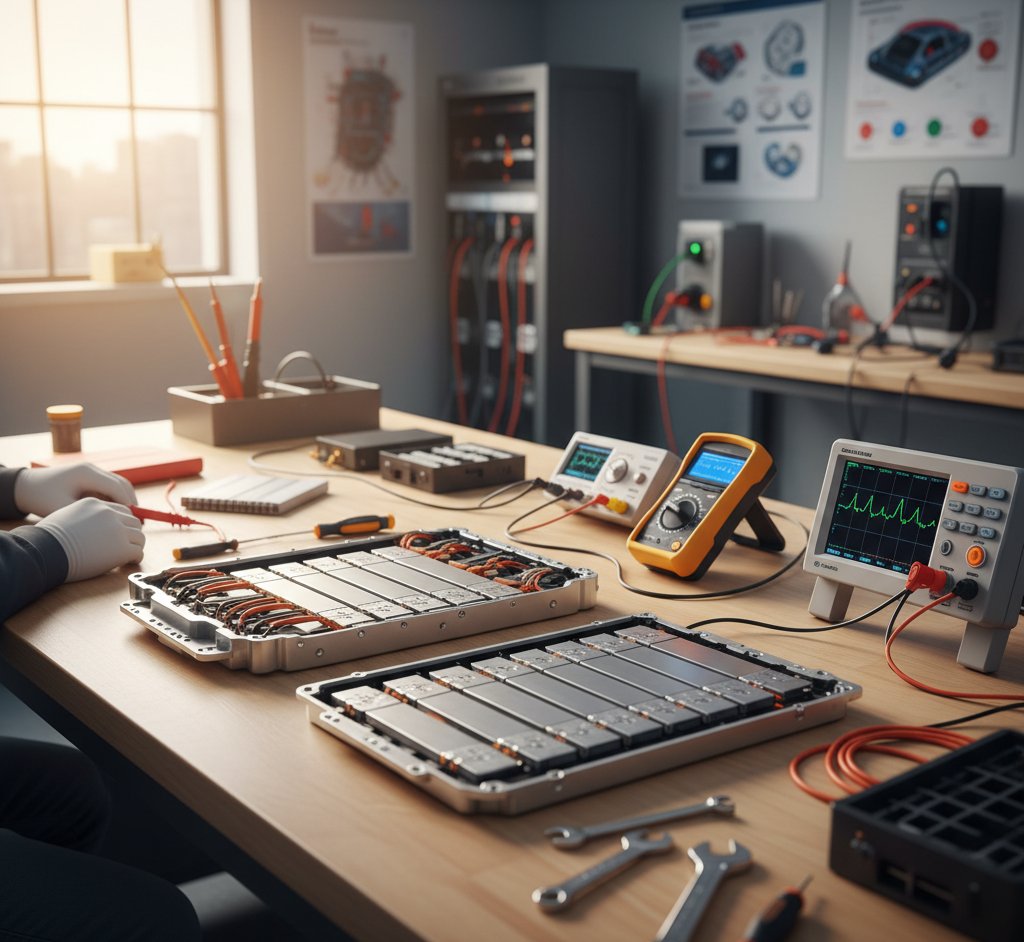
What are second-life EV cells?
When an electric vehicle's battery pack degrades to 70–80% of its original capacity, the car manufacturer or owner typically considers it "end of life" for automotive use. The reduced capacity means less driving range, which frustrates car owners but is perfectly acceptable for stationary energy storage.
These retired packs are dismantled (by specialist companies or individual resellers), and the individual modules or cells are sold on the second-hand market. For DIY solar builders, they represent a potentially cheap source of lithium cells.
The UK is particularly well positioned for this market. We have hundreds of thousands of early Nissan Leafs, BMW i3s, and Renault Zoes reaching the age where battery replacements or vehicle scrapping generates a steady supply of second-life modules.
Common second-life cells in the UK
Nissan Leaf modules
The most widely available. The original Leaf (2011–2017) uses modules containing 4 pouch cells in a 2S2P configuration, with each module providing approximately 0.5kWh at ~7.5V nominal.
Pros:
- Abundant supply — thousands of modules on the UK market
- Simple module format — easy to stack in series for higher voltages
- Well-documented by the DIY community
- Very cheap: £10–£25 per module (£20–£50/kWh)
Cons:
- NMC chemistry (not LiFePO4) — higher thermal risk
- Pouch cells are physically fragile
- Wide variation in remaining capacity
- Non-standard voltage per module makes integration with 48V inverters awkward (you need ~7 modules in series for ~52V, but fine-tuning is fiddly)
Tesla Model S/X modules
Tesla Model S and X packs use 18650 or 2170 cylindrical cells in modules. These are NCA chemistry.
Pros:
- High energy density
- Available from specialist dismantlers
- Well-characterised performance data
Cons:
- NCA chemistry — highest thermal runaway risk of any common EV chemistry
- Individual cell replacement within modules is impractical
- Modules are designed for Tesla's proprietary pack architecture
- More expensive than Leaf modules: £40–£80/kWh
BYD / Chinese EV LFP modules
Newer Chinese EVs (BYD, MG, NIO) increasingly use LiFePO4 cells. As these vehicles age, LFP second-life cells will become available. In 2026, the supply is still limited because most Chinese EVs in the UK are relatively new.
Pros:
- LFP chemistry — much safer
- Typically blade or prismatic format — easier to integrate
- Better cycle life remaining than NMC/NCA equivalents
Cons:
- Limited UK supply in 2026
- BYD blade cells require custom enclosures
- Less community documentation for these specific packs
NMC and NCA cells carry higher fire risk
Most currently available second-life EV cells are NMC or NCA chemistry — NOT the LiFePO4 used in purpose-built home batteries. These chemistries have lower thermal runaway thresholds and more energetic failure modes. If you build a home storage system from NMC/NCA cells, your thermal safety, ventilation, and fire detection requirements are substantially more stringent than for an LFP build. Read our thermal safety guide carefully.
Where to buy in the UK
Specialist dismantlers
Companies like Battery Emporium, EV West UK, and Zero EV specialise in dismantling end-of-life EVs and selling tested modules. Pricing is higher than buying from a scrapyard, but you get modules that have been tested and graded.
eBay and Facebook Marketplace
The cheapest source. Individual sellers — often mechanics or hobbyists who've parted out an EV — sell modules directly. Prices can be very low (£10–£15 per Leaf module) but there's typically no testing data. You're buying blind.
Scrapyards and vehicle dismantlers
Some progressive scrapyards now separate EV battery modules for resale. The DVLA End of Life Vehicle directive means EV batteries must be properly handled, so legitimate dismantlers are increasingly common.
Testing second-life cells
This is the critical step. Every second-life cell or module must be individually tested before incorporation into a pack. No exceptions.
Capacity test
Fully charge the module, rest for 1 hour, then discharge at a controlled rate (0.2–0.5C) while measuring total energy delivered. Compare against the module's original rated capacity.
- Above 80% of original: Excellent — plenty of usable life remaining
- 70–80% of original: Good — acceptable for home storage
- 60–70% of original: Marginal — will have limited remaining cycle life
- Below 60%: Reject — not worth building into a new system
Internal resistance test
Elevated internal resistance indicates cell degradation. Test with an AC impedance meter:
- Compare against the original spec (if available)
- Reject modules with resistance more than 50% above the original rating
- Match modules within 10–15% of each other for a balanced pack
Voltage consistency

Within a multi-cell module, measure individual cell voltages if accessible. Significant variation (>50mV) between cells within a module suggests internal imbalance that the original BMS couldn't resolve.
Invest in testing equipment
A programmable electronic load (like the EBC-A40L, ~£180) and an AC impedance meter are essential for second-life cell work. Testing 20–30 modules takes a full weekend but prevents you from building a pack with a hidden dud that fails within months. The testing equipment pays for itself on the first build.

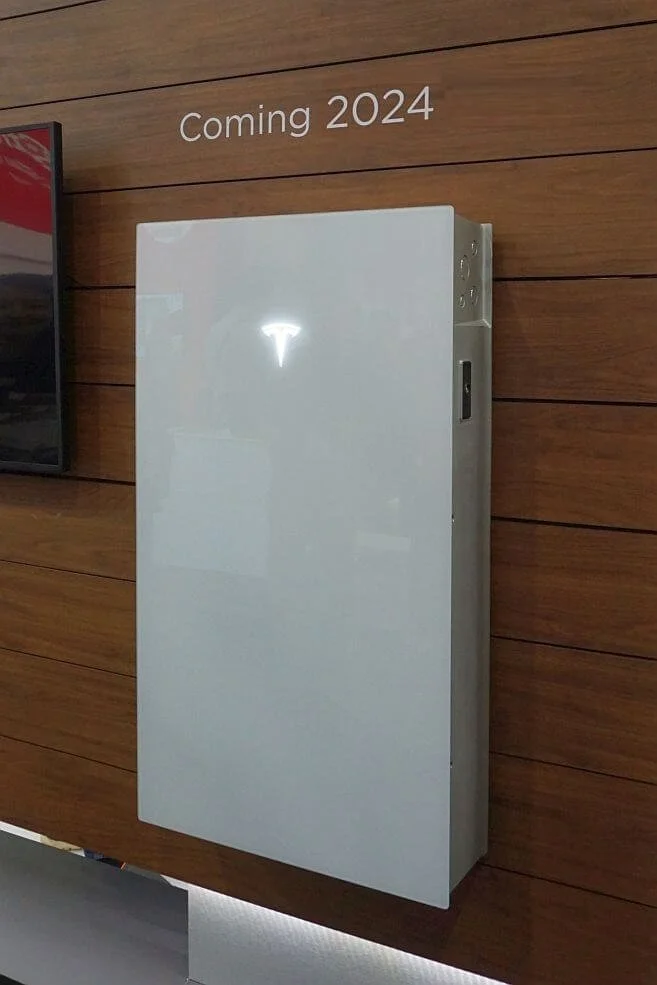
Tesla Powerwall 3
£8,50013.5
13.5
LFP
4000
Affiliate link — we may earn a small commission at no extra cost to you
Building a pack from second-life modules
Matching
Select modules with:
- Capacity within 5% of each other
- Internal resistance within 10% of each other
- Same chemistry and same original vehicle (mixing Leaf and Tesla modules is a bad idea)
- Similar remaining SoC at time of testing
BMS requirements
Second-life packs need a BMS more than new-cell packs do. The cells are already partially degraded and potentially mismatched. An active-balancing BMS (JK BMS recommended) provides much better long-term performance than passive balancing with aged cells.
Set conservative protection limits:
- Lower maximum cell voltage than new cells (e.g., 4.15V for NMC instead of 4.20V)
- Higher minimum cell voltage (e.g., 3.0V instead of 2.5V)
- Lower maximum charge rate (0.3C instead of 0.5–1C)
These conservative limits reduce stress on aged cells and extend remaining cycle life.
Voltage considerations
EV modules don't always produce convenient voltages for 48V inverters. Nissan Leaf modules are ~7.5V each, meaning you need 7 modules for ~52.5V (workable but not ideal). Tesla modules are ~22V, needing 2 in series for ~44V (low) or 3 for ~66V (too high for 48V systems).
This voltage mismatch often requires a DC-DC converter or an inverter that accepts a wider voltage range (Victron MultiPlus-II handles 38–66V, making it the go-to for second-life builds).
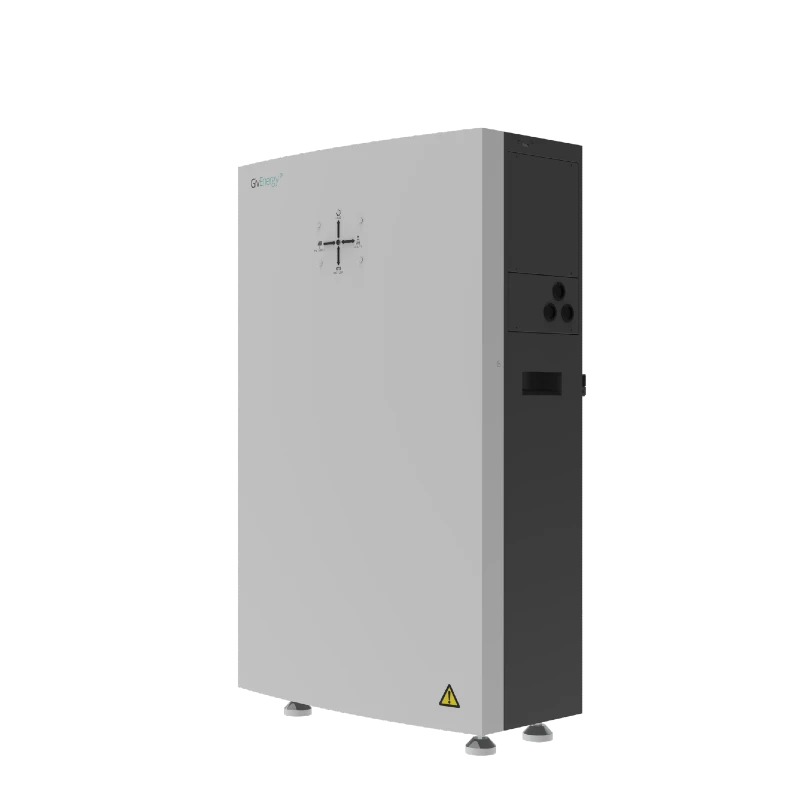
GivEnergy All-in-One 9.5kWh Battery
£5,5009.5
8.6
LFP
6000
Affiliate link — we may earn a small commission at no extra cost to you
Cost comparison: second-life vs new
For a 10kWh system:
| Approach | Cell cost | BMS + hardware | Total | Cost/kWh |
|---|---|---|---|---|
| Second-life Leaf modules (tested) | £300–£500 | £300 | £600–£800 | £60–£80 |
| New EcoWorthy modules | £1,400 | £0 (BMS included) | £1,400 | £140 |
| New EVE cells + JK BMS | £700–£850 | £200 | £900–£1,050 | £90–£105 |
| New Fogstar Drift | £2,800 | £0 (complete) | £2,800 | £280 |
The cost advantage of second-life cells is real but narrowing. New budget LFP cells from China have dropped in price to the point where the premium for new, warranted cells is modest. The time investment in testing, matching, and building with second-life cells is substantial.
Is it worth it in 2026?
The case for second-life cells:
- Lowest possible cost per kWh
- Environmentally responsible — extending battery life reduces mining demand
- Interesting technical project for experienced builders
- Good for large, non-critical installations (workshop, off-grid cabin)
The case against:
- NMC/NCA chemistry is inherently riskier than LFP
- No warranty — if modules fail, that's your problem
- Extensive testing required — time is money
- New LFP cells are approaching price parity
- Insurance implications are more complex (see our insurance guide)
Our honest recommendation: In 2026, the price gap between second-life NMC modules and new budget LFP cells has narrowed enough that new LFP is usually the better choice for home solar storage. The safety advantages of LFP, the warranty, and the reduced testing burden outweigh the modest cost saving from second-life cells.
The exception is if you can source second-life LFP modules — from BYD or Chinese EVs — at a good price. LFP cells degrade more gracefully, so second-life LFP at 75% capacity still has thousands of useful cycles ahead. Watch this market over the next 2–3 years as early Chinese EVs reach end-of-life.
Share this article

OVO has carefully selected trusted teams across the UK to install solar panels and heat pumps. Enjoy the personal touch of a local expert with the peace of mind of a household name.
Affiliate link — we may earn a small commission at no extra cost to you
Stay informed
Get free solar updates direct to your inbox
Related reading
Battery Cell Sourcing in the UK: Where to Buy LiFePO4 Cells
Where to buy LiFePO4 prismatic cells in the UK for DIY battery builds — trusted suppliers, grades, pricing, and how to avoid fakes and rejects.
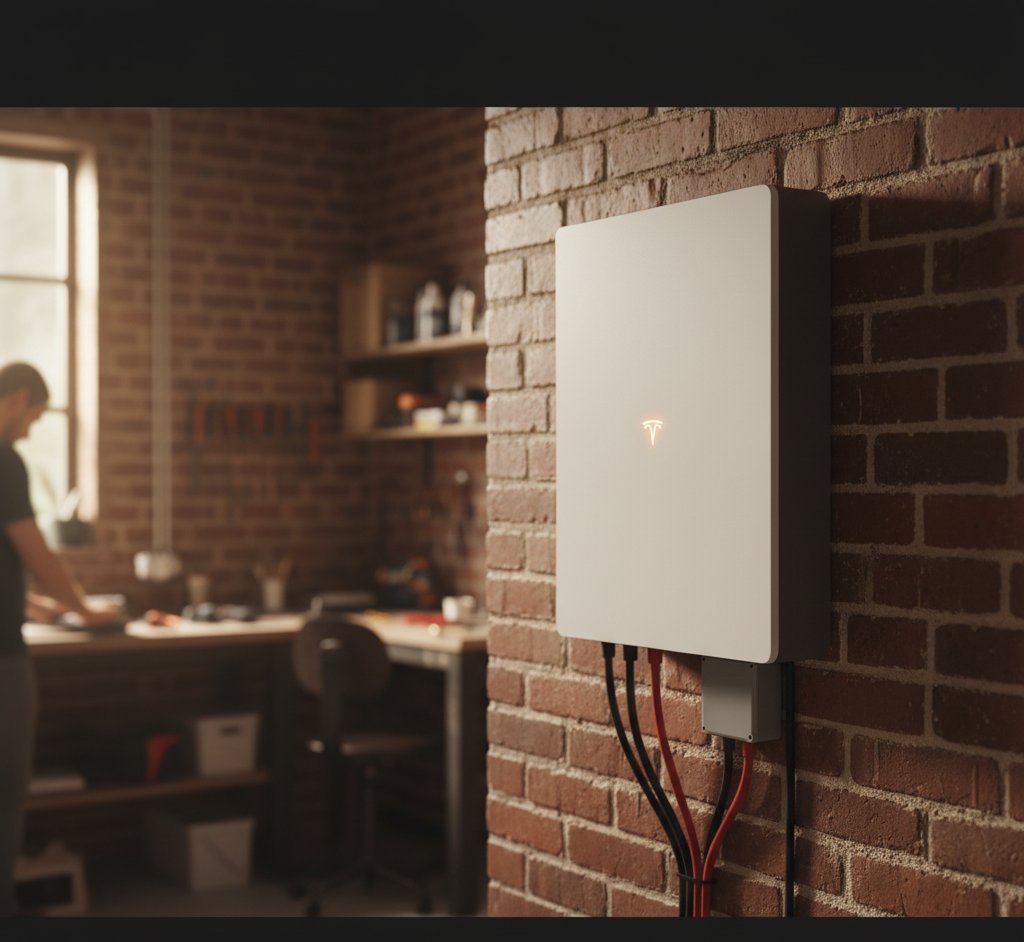
DIY Battery Storage in the UK: Complete Beginner's Guide
A practical guide to building your own DIY solar battery storage system in the UK — costs, legality, components, and whether it's actually worth it in 2026.
Battery Cycle Life Explained: How Long Will Your Solar Battery Last?
What battery cycle life really means for UK solar storage — how cycles are counted, what affects degradation, and realistic lifespan expectations.


Switch to Octopus Energy
Get 50 credit when you switch. We get 50 too — win-win.
What does this mean for YOUR home?
Design your perfect solar setup in under 3 minutes. Free, no sign-up required.
Build Your Solar System