This page contains affiliate links. If you purchase through them we may earn a small commission at no extra cost to you. Learn more
MHHS Explained: What Half-Hourly Settlement Means for Solar Households
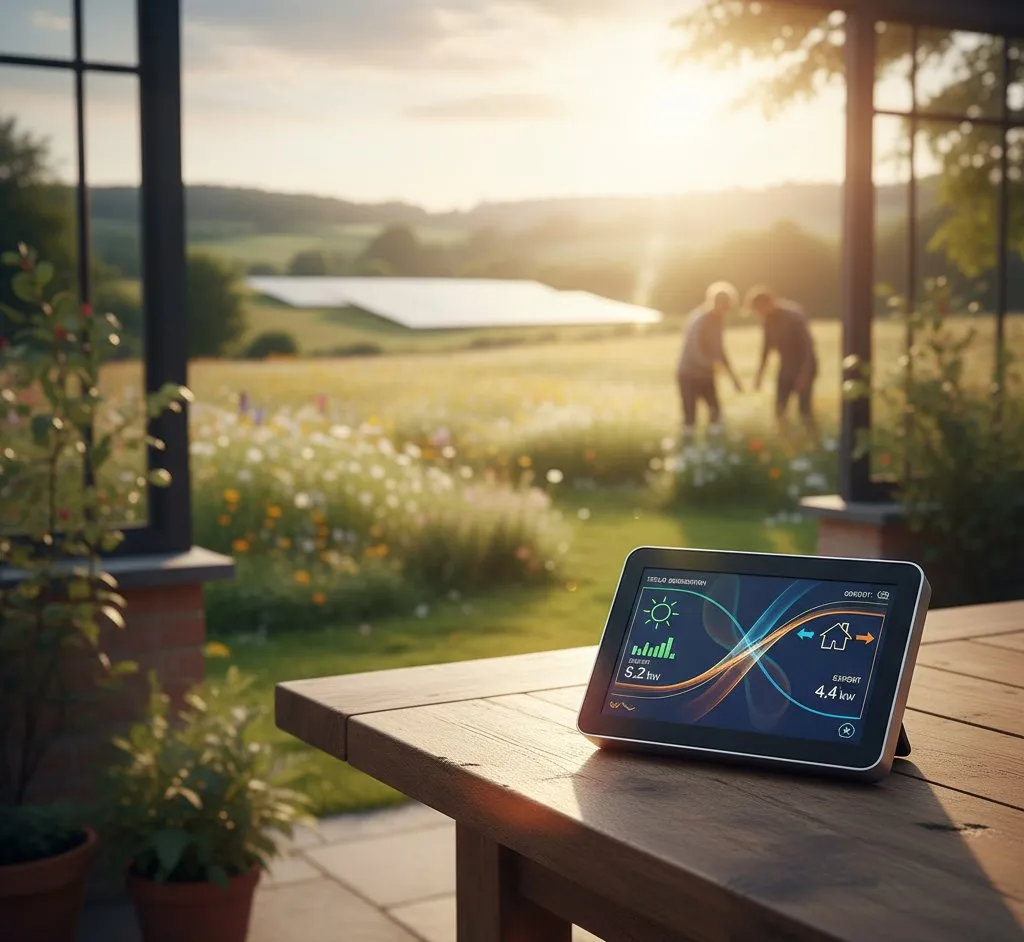
What is MHHS?
Market-wide Half-Hourly Settlement — MHHS for short — is an Ofgem programme that changes the fundamental way your energy bill is calculated. It is one of the most significant reforms to UK energy retail in a generation, though most households will never notice it happening.
Under MHHS, every electricity supplier must settle its accounts with the wholesale market and the network using your actual half-hourly consumption data, rather than estimates based on national averages. If that sounds technical, the plain English version is straightforward: your bill will reflect exactly when you used (and exported) electricity, down to every 30-minute slot, rather than a best guess based on someone who used electricity like you ten years ago.
The programme is being rolled out across all domestic and small business accounts. Mandatory migration began in October 2025 and the full transition must complete by May 2027.
How electricity settlement works today
To understand why MHHS matters, it helps to understand what happens right now when your energy supplier bills you — and why it is less accurate than you might assume.
Most domestic electricity meters, including many first-generation smart meters, are settled using what are called profile classes. These are standardised usage patterns created by the industry that describe when a typical household uses electricity across the day, week, and year.
Your supplier takes your total consumption over a billing period — say, 400 kWh in a month — and distributes it across the half-hours of that month according to your profile class. A household in profile class 1 (typical domestic with no Economy 7) is assumed to use electricity in a particular shape: more in the morning and evening, less overnight, more in winter than summer.
This is an average. It does not reflect your actual household at all. Your supplier does not know whether you charged your EV at 2am or ran your washing machine at 7pm. They know your total units and they apply a standard curve on top.
For the wholesale market, this matters because suppliers must buy electricity in advance for every half-hour slot. If their settlement data does not match when their customers actually used power, they face imbalance charges from the grid. These costs are ultimately passed back to consumers through standing charges and unit rates.
Why this creates distortions for solar households
Under profile-class settlement, your export payments are also estimated. Suppliers pay you for exports based on assumed patterns, not what your inverter actually sent to the grid at 1pm on a sunny Tuesday. As time-of-use tariffs grow more granular, the gap between when you actually exported and when the supplier assumes you exported becomes increasingly significant.
What changes with MHHS
MHHS replaces the profile class approach with settlement based on your actual half-hourly meter data.
Your SMETS2 smart meter already records consumption and export in 30-minute intervals. That data is transmitted to the Data Communications Company (DCC) and on to your supplier. Under MHHS, that granular data becomes the basis for how your supplier balances its books with the wholesale market.
In practical terms:
- Your supplier knows exactly when you used each kWh — not an average of what households like yours do
- Export payments are tied to actual export timestamps — if you exported at 4pm on a Friday, that is what gets settled
- Suppliers have accurate data to design and price time-of-use products — the risk of offering you cheap overnight power is lower because they can see precisely when you take it
- Imbalance costs fall — better data means suppliers buy electricity closer to when their customers actually need it, reducing wasteful balancing
This is the infrastructure change that makes the next generation of smart tariffs commercially viable at scale.
What this means for solar panel owners
If you have solar panels and receive Smart Export Guarantee payments, MHHS makes your export settlement more accurate and more valuable over time.
More accurate export payments. Under the current profile-class system, your SEG payments are calculated against your total export readings rather than a precise half-hourly breakdown. With MHHS, suppliers settle exports at the actual half-hourly level. For fixed-rate SEG tariffs this changes very little — you still receive the same pence per kWh regardless of when you export. But for variable export products, such as Octopus Agile Outgoing or the export component of Octopus Flux, the settlement now precisely matches when your panels generated and exported.
Better alignment with time-varying export rates. Agile Outgoing pays different rates in every half-hour slot — typically 8–12p/kWh on average, but higher during peak demand periods. For this to work correctly, the grid and your supplier need to know that your export happened at, say, 5:30pm rather than distributing it evenly across the day. MHHS provides exactly that granularity.
More innovative export products ahead. Because suppliers can now see your exports at half-hourly resolution, it becomes commercially practical to design products that reward households for exporting at valuable times — peak demand windows, periods of grid stress, or moments when local network capacity is tight. MHHS is the enabler for export products that do not yet exist but are coming.
Fixed SEG rates are unaffected immediately
If you are on a fixed-rate SEG tariff (say, 5p/kWh from your current supplier), you will not notice any change in your payments as a direct result of MHHS. The rate you agreed stays in place. What MHHS unlocks is better variable export products in future — and more accurate billing if you switch to one.
What this means for battery owners
Battery storage households stand to gain the most from MHHS, because the entire value case for a battery rests on the accuracy of time-of-use billing.
Arbitrage calculations become cleaner. Battery arbitrage — charging on cheap overnight electricity and discharging during expensive peak periods — depends entirely on your supplier accurately measuring when you imported each kWh. Under profile-class settlement, there was always a degree of approximation in how your overnight cheap-rate consumption was attributed. MHHS removes that ambiguity: your 2am charging session is settled at 2am rates, not smeared across the day.
Time-of-use tariff billing improves. Tariffs such as Octopus Go (5.5p/kWh overnight from April 2026), Octopus Cosy (10p/kWh in three off-peak windows), and Flux (tiered import and export rates throughout the day) all depend on half-hourly resolution to bill correctly. MHHS ensures these tariffs are settled accurately across the whole system — not just at your meter, but all the way back through the wholesale market.
Automation tools benefit from cleaner data. Systems like Predbat and inverter-native Agile scheduling optimise battery charge and discharge cycles based on forecast prices. These tools function correctly today, but MHHS means the broader ecosystem — supplier systems, grid balancing, network charging — is all aligned with the same half-hourly framework. Discrepancies between what your inverter sees and what your bill reflects become rarer.
Virtual power plant participation improves. As half-hourly settlement becomes universal, the signals that drive demand flexibility services — Octopus Saving Sessions, grid response programmes — become more accurate and more fairly rewarded. Battery owners who respond to flexibility calls will see those actions reflected correctly in their settlement.
Do you need a new meter?
MHHS requires a SMETS2 smart meter (second-generation smart meter). The good news is that if your smart meter was installed from 2018 onwards, you almost certainly already have one.
SMETS2 meters communicate via the DCC national network. They record consumption and export in half-hourly intervals and transmit this data automatically. You do not need to do anything. Your supplier will migrate you to MHHS settlement without any change to your hardware.
SMETS1 meters (typically installed 2011–2018) operate on a different communications system and were originally linked to individual supplier networks. Many SMETS1 meters are being enrolled into the DCC, which upgrades their effective functionality. However, SMETS1 meters may not reliably provide the half-hourly export data that MHHS requires. If you have a SMETS1 meter, contact your supplier to discuss a free upgrade.
Old-style meters (credit or prepayment meters with no smart functionality) cannot participate in MHHS at all. If you still have one of these, your supplier is required to offer you a smart meter upgrade free of charge as part of the national rollout.
How to check which meter you have
The simplest method is to ask your energy supplier directly — they can see your meter type on their system immediately. Alternatively, look at the meter itself: SMETS2 meters have a small communications hub (usually a separate unit near the meter) and often carry a label or sticker stating SMETS2 or GSME compliance. SMETS1 meters are older and have a different, usually larger, communications module — or none at all.
Requesting an upgrade. If you are still on a SMETS1 smart meter or an old-style meter, contact your energy supplier to request a SMETS2 upgrade. This is free and ensures you benefit from MHHS when it reaches your account.
The MHHS timeline
MHHS has been years in development. Here is where the programme stands:
Migration is phased and supplier-led. Your supplier will move your account to MHHS settlement at some point between October 2025 and May 2027. You will not necessarily receive a notification — it happens in the background on your supplier's systems.
Suppliers with larger smart meter estates and more advanced data infrastructure tend to migrate earlier. Smaller suppliers may complete closer to the 2027 deadline.
What you need to do
In most cases: nothing.
MHHS is a wholesale market and supplier-side reform. The migration happens on your supplier's systems. You do not need to change tariff, replace your meter, or take any action to be migrated.
There are, however, a few things worth checking:
-
Confirm you have a SMETS2 meter. If you are unsure, ask your supplier. If you have SMETS1 or an old-style meter, request a free upgrade now rather than waiting. Earlier is better — you will be eligible for better time-of-use tariffs sooner.
-
Check your export metering is working. If you have solar panels and claim SEG payments, log into your supplier's portal and confirm your exports are being recorded. If export data is missing or looks wrong, contact your supplier before MHHS settlement reaches your account.
-
Review your tariff once MHHS is in place. When half-hourly settlement is live on your account, it may be worth exploring whether a variable export or time-of-use tariff suits your usage pattern better than your current deal. Better settlement accuracy means more of the financial benefit flows correctly to you rather than being lost in rounding errors.
-
If you use automation tools, such as Predbat or Home Assistant-based inverter scheduling, no changes are required. These systems operate based on your inverter's data and price forecasts, which are not directly affected by how your supplier settles the wholesale market.
MHHS does not change your tariff automatically
Being migrated to MHHS settlement does not mean your tariff changes. You stay on your current deal. What changes is the precision of the data your supplier uses to reconcile its wholesale purchases. If you want to take advantage of better time-of-use products enabled by MHHS, you need to actively switch tariff through your supplier's normal process.
The bigger picture: why MHHS matters for the energy transition
MHHS is not just an accounting reform. It is part of a broader shift in how the UK energy system works.
As more renewable generation connects to the grid, the value of electricity becomes more time-dependent. Solar peaks at midday. Wind peaks unpredictably. Demand peaks in the early evening. The grid operator — National Grid ESO — needs to balance these flows constantly, and the cost of doing so is significant.
A system where every household's consumption is settled on actual half-hourly data, rather than national averages, gives the market far better signals. Suppliers can see when their customers are genuinely flexible. Network operators can see where demand concentrates. Price signals can be more accurately targeted to shift consumption to times when the grid is abundant and cheap.
For solar and battery households, this is straightforwardly good news. Your ability to generate, store, and shift consumption is exactly what the grid needs. The more accurately that flexibility is measured and rewarded, the better the financial case for the investments you have already made.
The dynamic energy pricing products you can access today — Agile, Flux, Intelligent Go — are possible because smart meters exist. MHHS is what makes those products financially sustainable at scale, and what enables the next generation of even more responsive tariffs.
Share this article

OVO has carefully selected trusted teams across the UK to install solar panels and heat pumps. Enjoy the personal touch of a local expert with the peace of mind of a household name.
Affiliate link — we may earn a small commission at no extra cost to you
Stay informed
Get free solar updates direct to your inbox
Related reading
Smart Meters and Solar Panels: What You Need to Know
How smart meters work with UK solar panels — export measurement, SEG eligibility, common problems, and why SMETS2 meters matter for solar households.
Octopus Agile Tariff: Is It Worth It with Solar?
A detailed look at the Octopus Agile tariff for UK solar households — how half-hourly pricing works, real savings potential, and who should avoid it.
Best Smart Tariffs for Battery Storage in 2026: Head-to-Head Comparison
The best tariff for battery storage in the UK compared side by side — Octopus Go, Agile, Flux, Cosy, E.ON Drive, and Tesla Energy Plan rated for 2026.


Switch to Octopus Energy
Get 50 credit when you switch. We get 50 too — win-win.
What does this mean for YOUR home?
Design your perfect solar setup in under 3 minutes. Free, no sign-up required.
Build Your Solar System