This page contains affiliate links. If you purchase through them we may earn a small commission at no extra cost to you. Learn more
Solar Tariffs UK: Complete Guide to Saving Money

Picking the right electricity tariff is one of the most impactful decisions a UK solar owner can make — yet most people are on a basic flat-rate deal because it requires no effort to stay put. This guide maps the UK tariff landscape and points you to the detailed articles for each option.
What are time-of-use tariffs and why do they matter for solar?
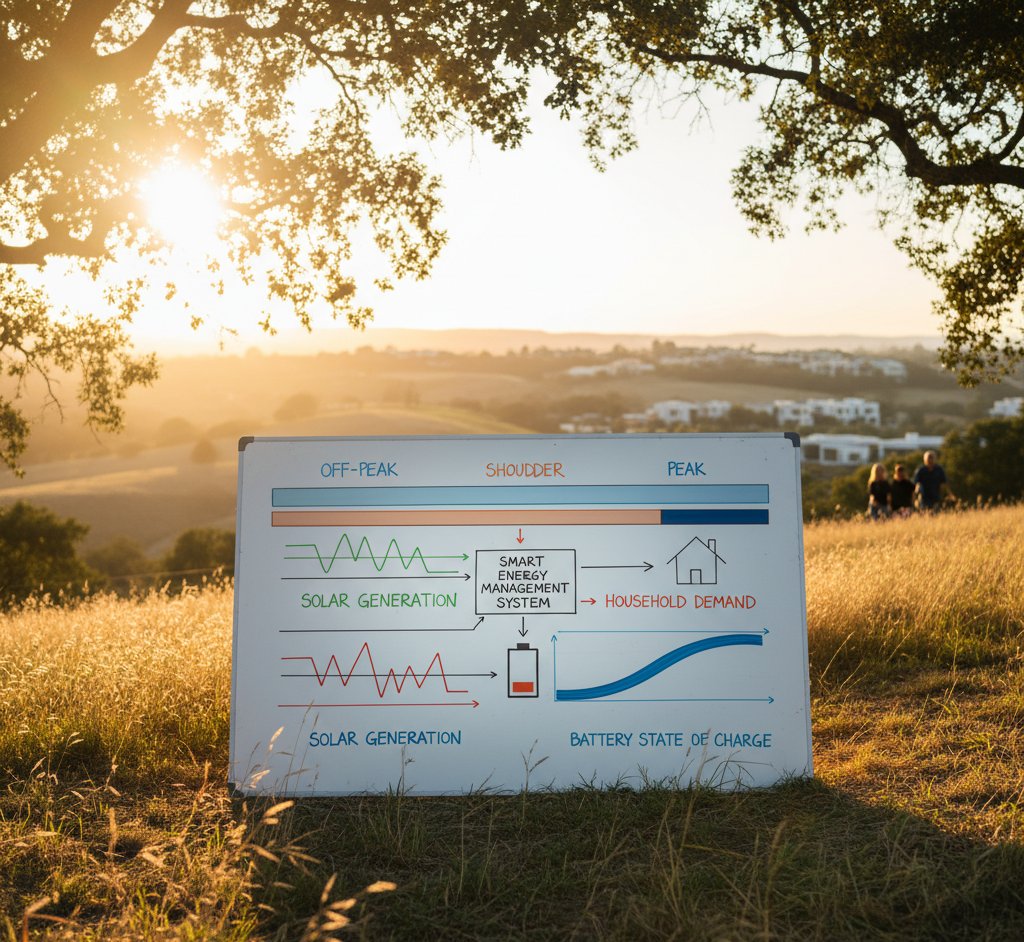
A standard flat-rate tariff charges the same price per kWh regardless of when you use electricity. A time-of-use (TOU) tariff charges different rates at different times — typically very cheap overnight (when demand is low and renewable generation is high) and more expensive during the evening peak.
For a solar household, this creates two opportunities:
- Shift your consumption to cheap periods. Run your dishwasher, washing machine, and EV charger overnight at 5–10p/kWh instead of during the day at 24p.
- Charge your battery cheaply and discharge during expensive periods. Buy at 5.5p, avoid paying 24p (or export at a premium rate during peaks on Flux). The spread between cheap and expensive slots is your profit margin.
Without a battery, TOU tariffs are still useful but require behavioural change. With a battery, automation does the work for you.
Import tariffs overview
All rates below are current as of April 2026 — always check the linked article for the latest figures before switching.
| Tariff | Provider | Cheap rate | Cheap window | Day rate | Best for |
|---|---|---|---|---|---|
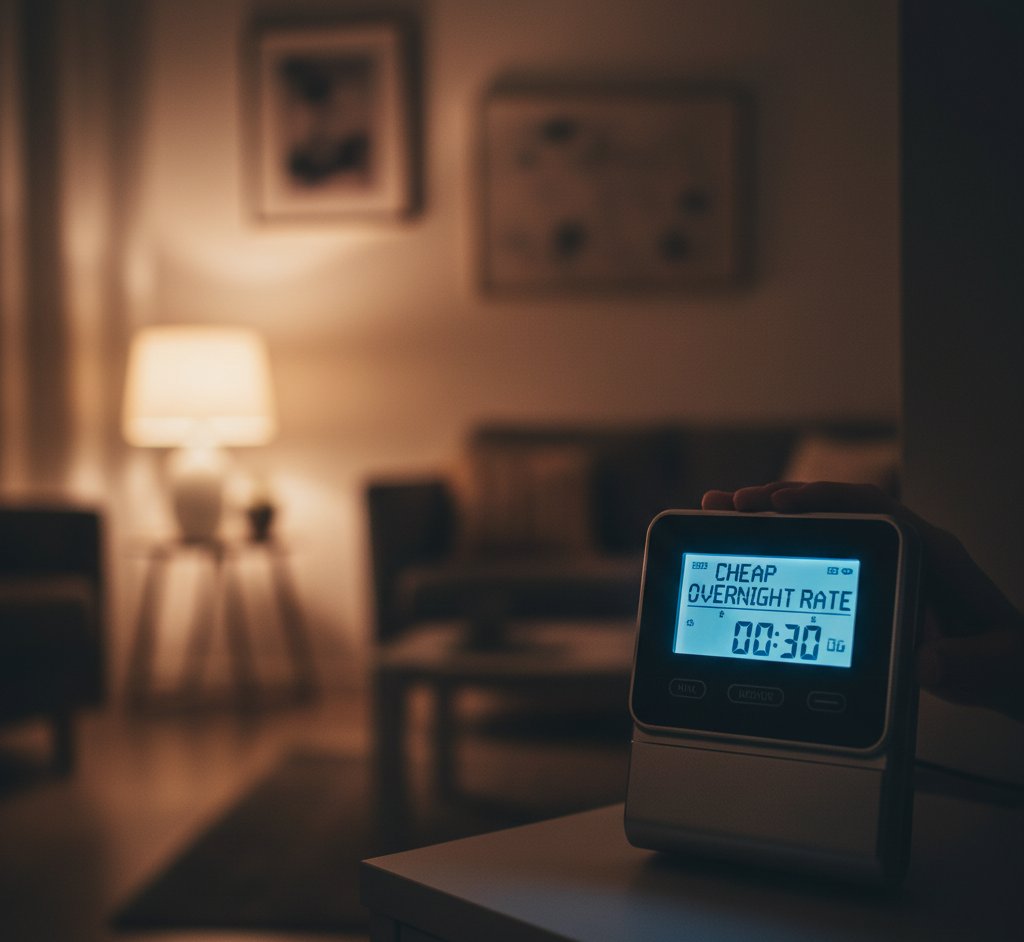
| Octopus Go | Octopus Energy | 5.5p/kWh | 00:30–05:30 | ~24p | Solar + battery, EV owners |
| Intelligent Go | Octopus Energy | 5.5p/kWh | 23:30–05:30 + smart dispatch | ~24p | EV owners with compatible charger |
| Octopus Flux | Octopus Energy | 10p (02:00–05:00) | 3 hrs | 24p day / 34p peak | Solar + battery, maximise export |
| Octopus Cosy | Octopus Energy | 10p/kWh | 3 windows, 8 hrs total | 24p | Heat pump households |
| Octopus Agile | Octopus Energy | Variable (can go negative) | Half-hourly | Variable | Tech-savvy, with automation |
| E.ON Next Drive | E.ON Next | 7p/kWh | Overnight | ~24p | EV owners, no Octopus access |
Octopus Go overnight rate as of April 2026
The Go overnight rate dropped significantly from April 2026 — check the Octopus Go tariff article for the current figure before making decisions. Regional rates vary and some areas have access to even lower overnight prices.
Export tariffs: what you earn for selling to the grid
When your solar panels generate more than you're using, the surplus is exported. How much you earn per kWh depends on your export arrangement.
Smart Export Guarantee (SEG)
The SEG is the government's minimum export framework — all energy suppliers with 150,000+ customers must offer at least one SEG tariff. Rates vary widely:
- Basic fixed SEG rates: typically 3.3–5.2p/kWh
- Best fixed SEG rates: up to 15p/kWh (from specialist providers)
- To receive SEG payments, your system must be MCS-certified
Read Smart Export Guarantee explained and Claiming SEG payments for current provider rates.
Agile Outgoing
Octopus Agile Outgoing pays you a variable half-hourly rate for exports. Typical range is 8–12p/kWh, rising sharply during grid stress events. For a solar household with good midday generation, this can significantly outperform fixed SEG rates.
Read Agile Outgoing export tariff for how it works and when it makes sense.
Flux export
On Octopus Flux, your export rate is also time-of-use:
- Off-peak export: low rate
- Day export: moderate rate
- Peak export (16:00–19:00): substantially higher — currently the best automated peak export rate available
This makes Flux uniquely attractive for battery owners who can time their export to the evening peak. See Octopus Flux for the current rate structure.
Which tariff for your situation
This is not a recommendation — it is a framework for thinking through the decision. Every household's usage pattern is different.
Solar only, no battery, no EV A standard flat-rate tariff plus a competitive fixed SEG deal is often perfectly adequate. You self-consume what you can during the day and export the rest. The effort of managing a TOU tariff without automation to exploit cheap periods may not be worthwhile.
Solar + battery This is where TOU tariffs really pay. Your main options:
- Flux — designed precisely for this: charge cheaply at night, self-consume during the day, export to the grid at the evening peak rate. Simplest for automation.
- Go + SEG — cheaper overnight charging (Go), separate SEG deal for export. More flexibility but two contracts to manage.
- Agile + Agile Outgoing — highest ceiling for savings if you have automation (Predbat or similar) to exploit every price swing. Also highest complexity.
Read Best tariffs for battery storage for a detailed comparison.
EV owner
- Octopus Go — simplest, cheap overnight charging for both car and battery
- Intelligent Go — if you have a compatible EV charger or car, the smart dispatch feature can extend cheap charging beyond the fixed window, optimising around grid conditions
Heat pump household
- Octopus Cosy — three cheap windows totalling 8 hours per day (04:00–07:00, 13:00–16:00, 22:00–midnight). The 13:00–16:00 window aligns well with midday solar generation, so your heat pump runs during your cheapest or self-generated power.
Tech enthusiast with automation
- Agile import + Agile Outgoing export — half-hourly prices, sometimes negative (you're paid to consume), occasionally very high. Pair with Predbat or Home Assistant automations to exploit every price movement.
Battery arbitrage
The spread between your cheap import rate and your peak usage rate (or peak export rate) is the financial engine of a solar + battery system. If you charge at 5.5p and avoid paying 24p, you save 18.5p per kWh cycled through your battery. A 10kWh battery cycled once a day saves roughly £675/year from arbitrage alone — before counting solar self-consumption.
For a full worked example with current rates, read Battery arbitrage trading.
Virtual power plants
Several providers now offer VPP schemes that pay you to dispatch your battery in response to grid requests. These can layer on top of your existing tariff for additional income. Read Virtual power plants to understand how they work and which battery brands participate.
Curtailment and negative pricing
Occasionally, wholesale electricity prices go negative — the grid has too much power. On Agile, this appears as negative per-unit prices: you're paid to consume. On the export side, DNOs may constrain or curtail your export during grid stress. Read Curtailment and negative pricing for the full picture.
A note on rates
This article deliberately does not hardcode specific pence-per-kWh figures, because tariff rates change quarterly with the Ofgem price cap and more frequently on variable tariffs like Agile. Always check the individual tariff articles — which are updated when rates change — before making switching decisions.
Share this article

OVO has carefully selected trusted teams across the UK to install solar panels and heat pumps. Enjoy the personal touch of a local expert with the peace of mind of a household name.
Affiliate link — we may earn a small commission at no extra cost to you
Stay informed
Get free solar updates direct to your inbox
Related reading
Best Smart Tariffs for Battery Storage in 2026: Head-to-Head Comparison
The best tariff for battery storage in the UK compared side by side — Octopus Go, Agile, Flux, Cosy, E.ON Drive, and Tesla Energy Plan rated for 2026.
Octopus Go and Intelligent Go Explained
How Octopus Go and Intelligent Octopus Go work for UK households with EVs and solar panels — rates, eligibility, and real-world savings in 2026.

Octopus Flux Tariff: The Best Tariff for Solar + Battery?
How Octopus Flux works for UK solar and battery owners — import/export rates, daily schedule, real savings calculations, and whether it beats Agile.


Switch to Octopus Energy
Get 50 credit when you switch. We get 50 too — win-win.
What does this mean for YOUR home?
Design your perfect solar setup in under 3 minutes. Free, no sign-up required.
Build Your Solar System