This page contains affiliate links. If you purchase through them we may earn a small commission at no extra cost to you. Learn more
Month-by-Month Solar Generation in the UK: What to Actually Expect

Solar panels in the UK don't generate evenly across the year. Not even close. Around 60–70% of your annual output comes between April and September, and the winter months produce surprisingly little. This isn't a fault — it's just how solar works at 51–57 degrees north. Here's what to actually expect, month by month, based on real MCS data rather than optimistic installer claims.
The Reality of UK Solar Generation
If an installer tells you solar panels generate electricity "all year round," that's technically true but deeply misleading. A 4.5kW system in southern England that produces 520 kWh in June will produce just 80 kWh in December. That's not a rounding error — it's an 85% drop.
This is normal. It's physics. The UK's latitude means winter days are short, the sun is low, and cloud cover is heavy. None of this means solar isn't worth it — but it does mean you need to plan around the seasonal pattern rather than pretend it doesn't exist.
Monthly Generation: 4.5kW South-Facing System
The table below shows realistic monthly generation for a 4.5kW south-facing system at three UK locations, based on MCS irradiance data. These figures assume a 30-degree roof pitch with no significant shading.
| Month | South East (~1,000 kWh/kWp) | North West (~840 kWh/kWp) | Scotland (~780 kWh/kWp) |
|---|---|---|---|
| January | ~100 kWh | ~80 kWh | ~70 kWh |
| February | ~150 kWh | ~125 kWh | ~110 kWh |
| March | ~300 kWh | ~250 kWh | ~230 kWh |
| April | ~420 kWh | ~350 kWh | ~320 kWh |
| May | ~500 kWh | ~420 kWh | ~380 kWh |
| June | ~520 kWh | ~435 kWh | ~400 kWh |
| July | ~500 kWh | ~420 kWh | ~380 kWh |
| August | ~440 kWh | ~370 kWh | ~340 kWh |
| September | ~320 kWh | ~270 kWh | ~245 kWh |
| October | ~200 kWh | ~165 kWh | ~150 kWh |
| November | ~110 kWh | ~90 kWh | ~80 kWh |
| December | ~80 kWh | ~65 kWh | ~55 kWh |
| Annual | ~3,640 kWh | ~3,040 kWh | ~2,760 kWh |
These are for a 4.5kW system. Scale linearly for other sizes — a 6kW system generates roughly 1.33x these figures, a 3kW system about 0.67x.
How to Use This Table
Find your closest region, then look at the annual total. Compare it against any generation estimate in your installer's quote. If their figure is more than 10% higher than the table above for your region and system size, ask them to explain the difference.
How Roof Direction Affects Generation
Not everyone has a south-facing roof. Here's how direction changes annual output compared to south-facing, assuming the same system size:
| Roof Direction | % of South-Facing Output | 4.5kW Annual (South East) |
|---|---|---|
| South | 100% | ~3,640 kWh |
| South-East / South-West | ~95% | ~3,460 kWh |
| East or West | ~80% | ~2,910 kWh |
| North-East / North-West | ~65% | ~2,370 kWh |
| North | ~55% | ~2,000 kWh |
East or west-facing panels still generate plenty of useful electricity. The generation curve shifts — east-facing panels produce more in the morning, west-facing more in the afternoon — but the annual total is roughly 80% of south-facing. That's still a solid return.
North-facing panels at around 55% efficiency are harder to justify financially, but even these can make sense on very large roofs where you've already filled the south-facing side.
Be Cautious With North-Facing Quotes
Some installers will quote north-facing panels using south-facing generation figures. Always ask: "Is that estimate based on my actual roof direction, or is it a generic figure?" If they can't answer clearly, get another quote.
East/West Split Systems
A popular configuration is splitting panels across east and west roof faces. This generates less peak power than south-facing but spreads generation across more of the day — useful if you're home mornings and evenings rather than midday.
| Month | South-Facing 4.5kW | East/West Split 4.5kW |
|---|---|---|
| June | ~520 kWh | ~415 kWh |
| December | ~80 kWh | ~65 kWh |
| Annual | ~3,640 kWh | ~2,910 kWh |
The annual total is lower, but the generation profile can actually match household consumption better. If you're not adding a battery, an east/west split can mean higher self-consumption even with less total generation.
What Happens in Winter
Winter is where the maths of solar gets uncomfortable. From November through January, your 4.5kW system in the South East generates roughly 290 kWh total — about the same as June alone. In Scotland, those three months produce around 205 kWh.
This is why batteries and smart tariffs transform the economics of a solar system:
Battery storage lets you store cheap off-peak electricity overnight and use it during the day. On a tariff like Octopus Go at ~5.5p/kWh off-peak, you can charge a battery for a fraction of the daytime rate and ride through winter without paying peak prices.
Smart tariffs like Octopus Flux or Agile let you buy electricity when it's cheapest and sell when it's most valuable. In winter, this arbitrage strategy can offset much of the lost solar generation.
Solar diverters like the myenergi Eddi are less useful in winter — there simply isn't enough excess solar to divert. But if you have a hot water tank, even a small amount of diverted solar reduces your heating bill.
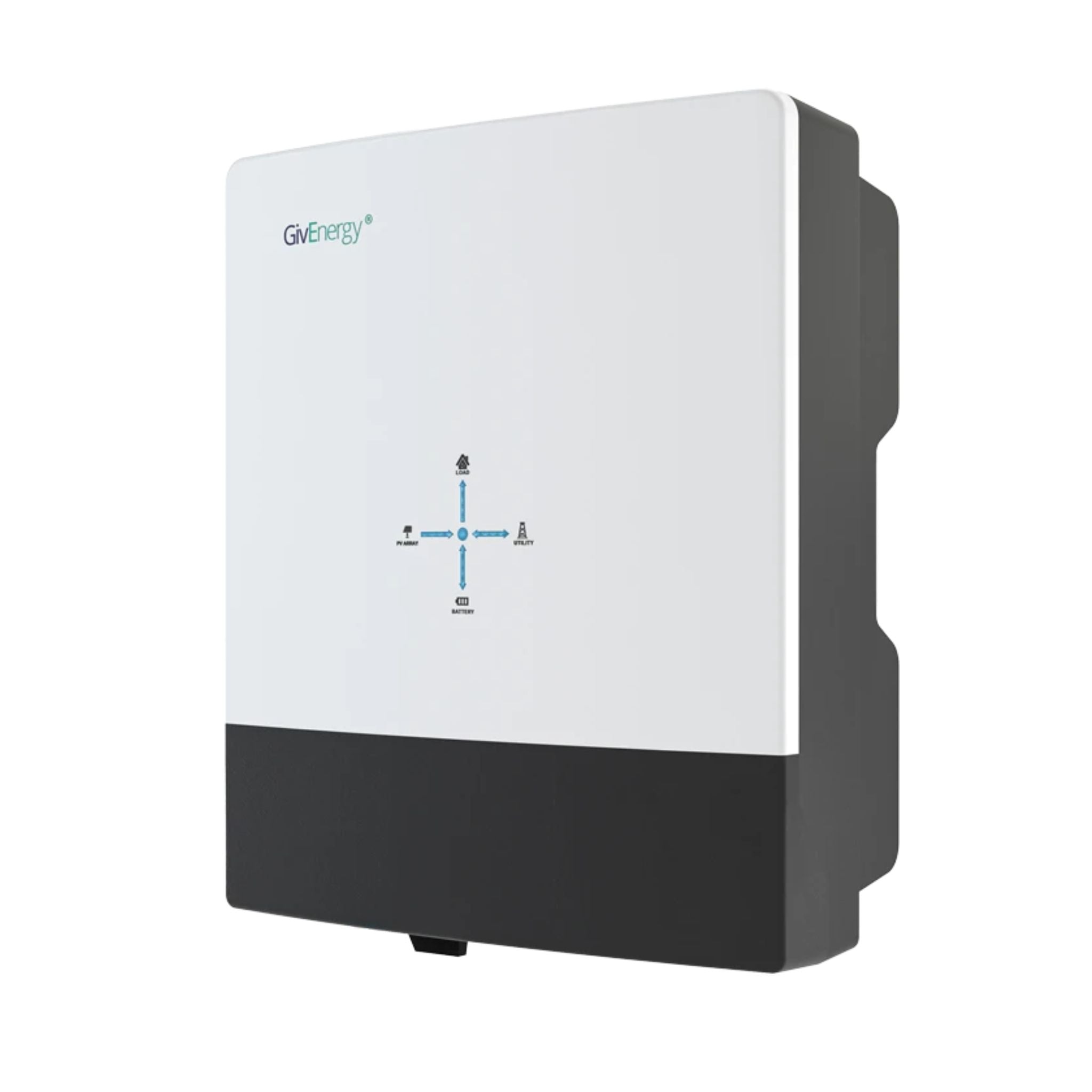
GivEnergy All-in-One 5kW Hybrid Inverter
£1,2005
7.5
2
48V
Affiliate link — we may earn a small commission at no extra cost to you
Why Installers Oversell Generation
Some installer quotes show generation figures that look too good to be true. That's because they are. Common tricks include:
Using "peak sun hours" without loss factors. Raw irradiance data doesn't account for inverter losses (typically 3–5%), cable losses (1–2%), temperature derating, or soiling. A responsible estimate applies these deductions.
Quoting south-facing figures for a non-south roof. If your roof faces east, the estimate should reflect that — roughly 80% of the south-facing figure, not the same number.
Using best-case irradiance data. Some tools default to the sunniest UK location. Your estimate should be based on your actual postcode.
Ignoring shading. Nearby trees, chimneys, neighbouring buildings, and satellite dishes all cause shading losses. A proper site survey identifies these and adjusts the estimate accordingly.
Check Against MCS Data
The MCS publishes standard irradiance data by UK region. Ask your installer to confirm their generation estimate aligns with MCS figures for your postcode, roof direction, and pitch. If they can't explain how they calculated the estimate, that's a problem.
Making the Most of Seasonal Variation
Rather than being disappointed by winter output, plan for it:
-
Size your system for summer excess. Oversizing slightly means more to export (earning SEG payments) in summer and more useful generation in the shoulder months.
-
Add a battery. Even a modest battery (5–10 kWh) lets you store daytime solar for evening use in summer and cheap off-peak electricity for daytime use in winter.
-
Choose a smart tariff. Time-of-use tariffs make batteries far more valuable in winter. Charging at ~5.5p/kWh overnight (Octopus Go) and using that power instead of paying ~24p during the day saves real money regardless of solar generation.
-
Don't ignore spring and autumn. March through May and September through October are productive months that people often overlook. A good chunk of your annual payback comes from these shoulder seasons.
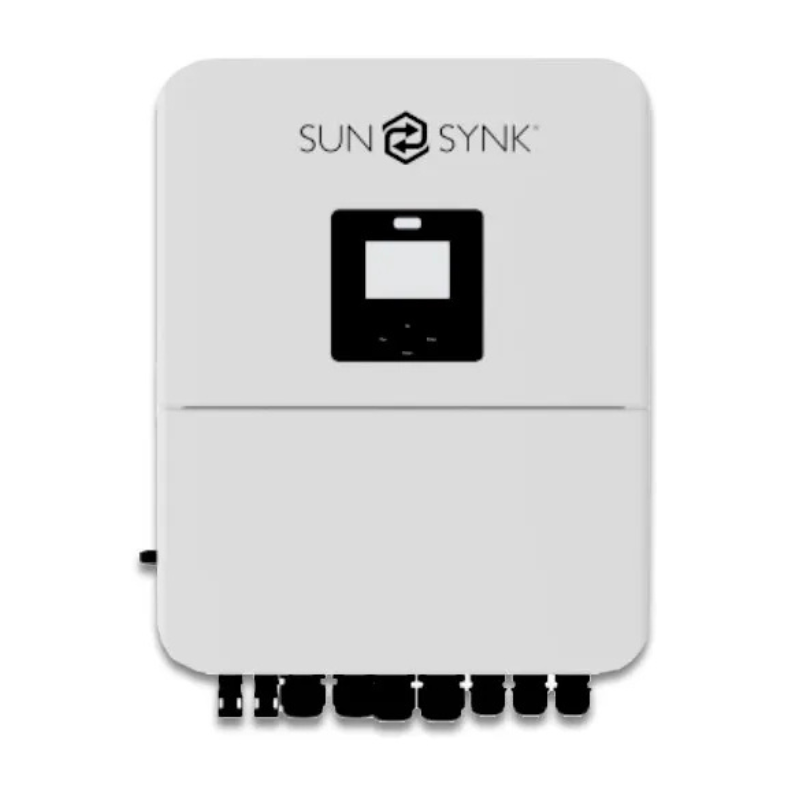
SunSynk 5kW Hybrid Inverter
£1,1505
7.5
2
48V
Affiliate link — we may earn a small commission at no extra cost to you
What This Means for Payback
Using the South East figures for a 4.5kW system generating 3,640 kWh per year, and assuming you self-consume 50% of generation at ~24.5p/kWh (April 2026 price cap) and export the rest at 12p/kWh (a competitive SEG rate):
- Self-consumption savings: 1,820 kWh x 24.5p = £446/year
- Export income: 1,820 kWh x 12p = £218/year
- Total annual benefit: ~£664/year
With a battery improving self-consumption to 75%:
- Self-consumption savings: 2,730 kWh x 24.5p = £669/year
- Export income: 910 kWh x 12p = £109/year
- Total annual benefit: ~£778/year
These are conservative, realistic figures — not marketing claims. Your actual savings depend on your electricity usage patterns, tariff, and how much generation you can use directly.
For a detailed breakdown of costs, see our guide on solar panel costs in the UK. To understand how generation varies by roof orientation, we have a dedicated deep-dive on that too.
Share this article

OVO has carefully selected trusted teams across the UK to install solar panels and heat pumps. Enjoy the personal touch of a local expert with the peace of mind of a household name.
Affiliate link — we may earn a small commission at no extra cost to you
Stay informed
Get free solar updates direct to your inbox
Related reading
How Much Electricity Do Solar Panels Generate in the UK?
Real kWh figures for UK solar systems by size, region, and orientation — including seasonal variation, the effect of roof angle, and why real-world output differs from the spec sheet.
Seasonal Solar Generation Profiles UK
How solar panel output varies by season in the UK. Monthly generation profiles, winter vs summer output, and what this means for your energy bills.
Roof Orientation and Solar: Direction Trade-Offs
How roof orientation affects solar panel performance in the UK. South, east, west, and north-facing roof output compared, plus split-orientation strategies.


Switch to Octopus Energy
Get 50 credit when you switch. We get 50 too — win-win.
What does this mean for YOUR home?
Design your perfect solar setup in under 3 minutes. Free, no sign-up required.
Build Your Solar System